
13 Disability Categories Under IDEA That Qualify a Child for an IEP
Do you think your child might qualify for an IEP or are you confused about all the different disability categories? Many parents know their child is struggling but aren't sure what the actual requirements are, or even where to start.
To receive an IEP (Individualized Education Program), your child must qualify under at least one of 13 specific disability categories outlined in a federal law called IDEA, the Individuals with Disabilities Education Act.
As a former special education teacher one of the most common things I saw was parents coming into IEP meetings having no idea what the disability categories were, or what they meant for their child. In this guide, we're breaking down all 13 categories in plain, parent-friendly language.
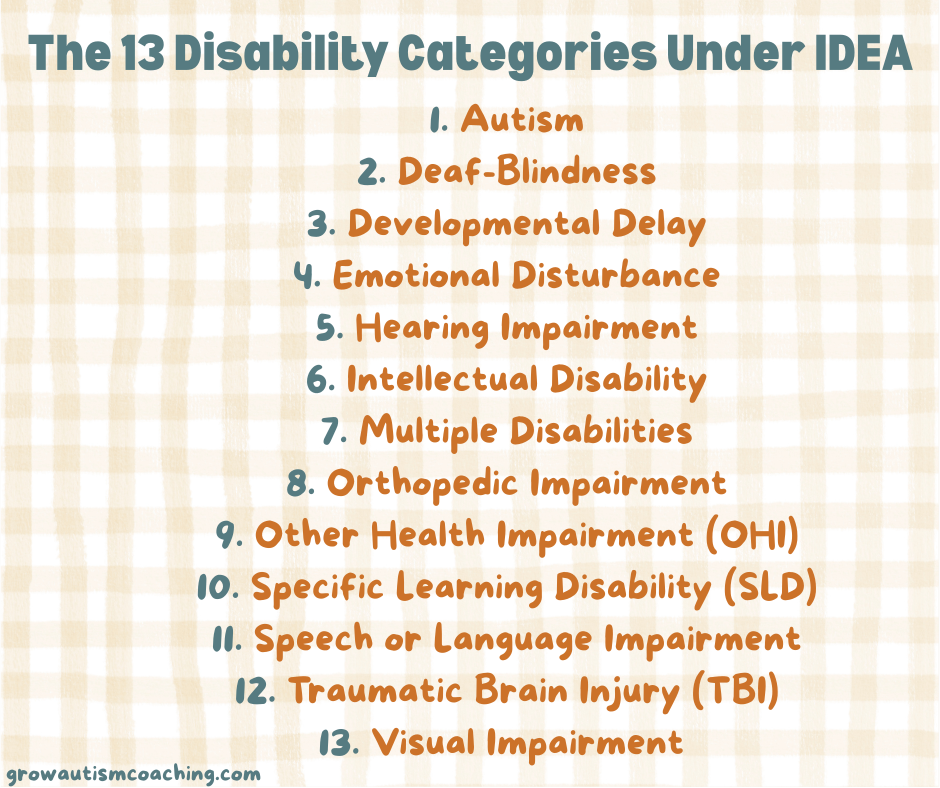
Here's what we'll cover:
- What IDEA is and why these categories matter for IEP eligibility
- All 13 disability categories explained
- What qualifies a child for an IEP under each category
- What to do if your child qualifies under more than one category
- A bonus tip on how to get extra support navigating the IEP process
- FAQs parents ask most
First, What Is IDEA and Why Does It Matter?
Before diving into the 13 categories, it's important to understand the "why" behind them. The Individuals with Disabilities Education Act (IDEA) is a federal law that requires public schools to provide a free and appropriate public education (FAPE) to children with disabilities. IDEA governs how state and local agencies provide services, and it recognizes 13 disabilities that qualify for special education. If your child needs special education services, the school team will identify which of those 13 disability categories best fits their needs.
Here's the key thing parents often don't realize: not every student with a disability automatically qualifies for special education. To be eligible, a student must fall into one of the 13 disability categories listed under IDEA AND show a true need for specially designed instruction because they are not successfully progressing through the general education curriculum.
In other words, two things must be true:
- Your child fits a disability category, and
- That disability is affecting their ability to learn
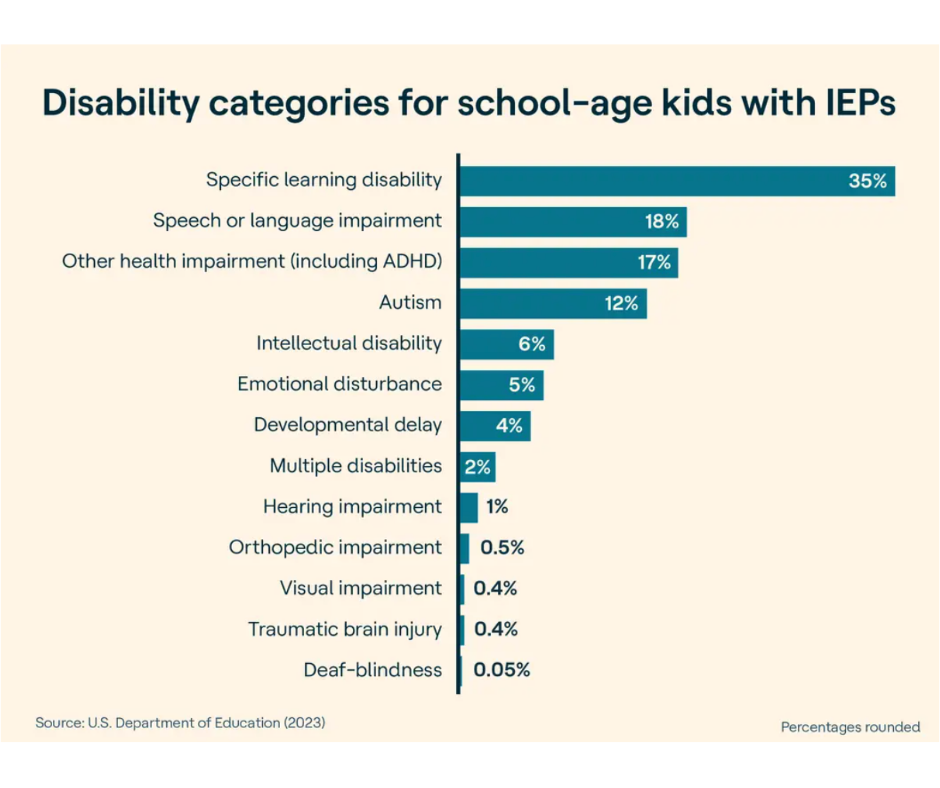
1. Specific Learning Disability (SLD)
Specific Learning Disability, or SLD, is the most common disability category under IDEA.
SLD is an umbrella term that covers a range of learning challenges. These are not related to intelligence, kids with SLDs are often very bright. The challenge is that their brain processes certain types of information differently.
Common conditions that fall under SLD include:
- Dyslexia (difficulty with reading and language processing)
- Dyscalculia (difficulty with math concepts)
- Dysgraphia (difficulty with writing)
- Auditory processing disorder (difficulty understanding and making sense of what they hear, even though their actual hearing is fine)
- Non-verbal learning disabilities (difficulty with visual-spatial skills, recognizing patterns, and understanding non-verbal social cues like body language and facial expressions)
For a child to qualify under SLD, the team must find that the learning challenge significantly impacts their ability to read, write, reason, or do math, and that it's not simply due to lack of opportunity or another disability.
What this looks like: A child who is clearly bright and curious but struggles significantly with reading despite lots of support and practice may qualify under SLD.
2. Speech or Language Impairment
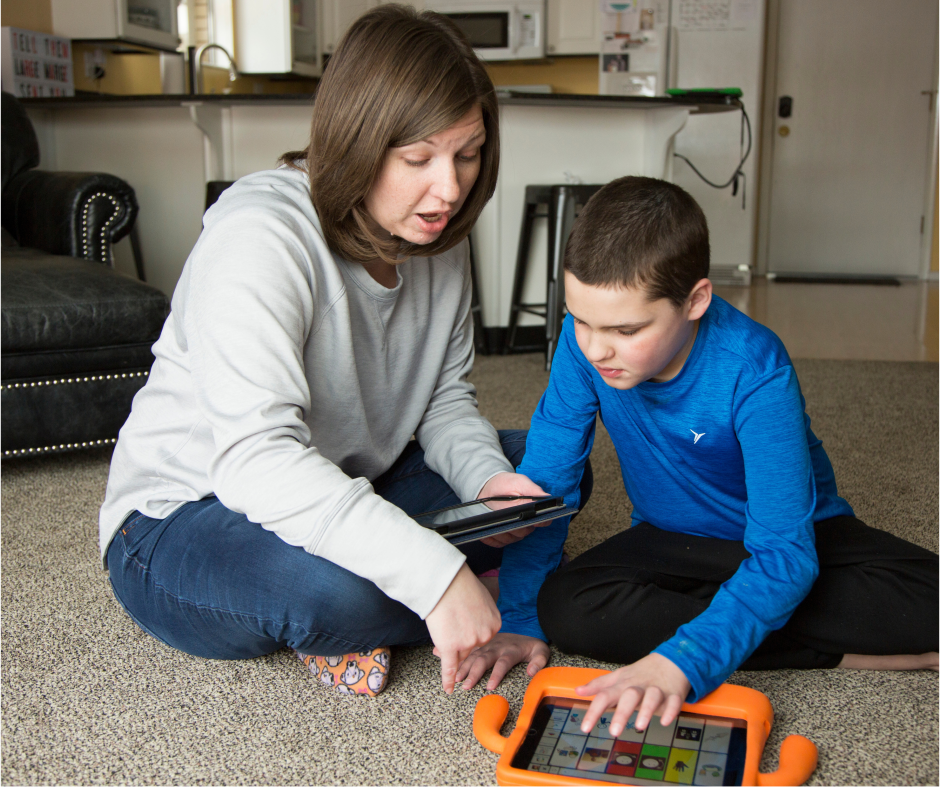
Adam using his AAC. Picture Credit: CC-By Scot Wahlquist
This category covers children who have significant difficulties with communication. That can mean trouble with how they produce sounds (articulation), how they use language to express themselves (expressive language), or how they understand what others are saying (receptive language).
It also includes stuttering and voice disorders. The key word here is "significant", a child who mispronounces a few words isn't necessarily going to qualify. The communication difficulty has to be impacting their ability to learn and participate in school.
Speech or Language Impairment is one of the most common reasons young children are first referred for special education services. Many autistic children carry this eligibility category alongside their autism classification.
What this looks like: A child who has difficulty forming complete sentences, is hard to understand, or has trouble following verbal directions in the classroom.
3. Autism Spectrum Disorder (ASD)
This one is especially relevant for families in this community. Autism is defined as a developmental disability characterized by significant difficulties in social interaction, communication, and repetitive behaviors.
Under IDEA, a child who has been identified with Autism Spectrum Disorder may qualify for an IEP under this category - but remember, the disability must also be impacting their education. For most autistic children, it does impact multiple areas of school life, from communication and social interaction to sensory challenges and executive functioning.
It's worth knowing that many autistic children also qualify under additional categories like Speech or Language Impairment or Other Health Impairment. A child can meet the eligibility criteria for multiple categories. All qualifying categories should be listed in the evaluation report and the child's IEP.
What this looks like: A child whose communication differences, sensory sensitivities, or need for routine make it difficult to access the general education curriculum without additional support.
4. Other Health Impairment (OHI)
Other Health Impairment is one of the most misunderstood categories and also one of the broadest. OHI covers any chronic or acute health condition that affects a child's strength, vitality, or alertness in a way that limits their ability to participate in school.
Conditions commonly classified under OHI include:
- ADHD
- Epilepsy
- Diabetes
- Asthma
- Heart conditions
- Tourette Syndrome
- Lead poisoning
- Sickle cell disease
ADHD is by far the most common reason children qualify under OHI. A child with ADHD whose attention challenges significantly affect their ability to learn, organize, complete work, or stay on task may qualify here.
What this looks like: A child with ADHD who is struggling to complete assignments, follow multi-step directions, or stay focused long enough to benefit from instruction.
5. Emotional Disturbance (ED)
Emotional Disturbance is a category that causes a lot of confusion, and sometimes concern, for parents. The name can sound alarming, but it simply refers to emotional or behavioral challenges that are significant enough to affect a child's ability to learn.
A few conditions that fall under this category include anxiety, depression, and bipolar disorder. Common special education services include an evaluation by a behavior specialist. They can develop a behavior support plan that can help a child manage overwhelming feelings and situations through pre-determined strategies.
To qualify, the emotional or behavioral difficulties must be present over a long period of time, happen across multiple settings (not just at home), and be significant enough to impact the child's educational progress.
What this looks like: A child who, despite consistent interventions and support, continues to struggle significantly with emotional regulation that they are unable to learn effectively or function in the normal school environment over an extended period of time.
6. Intellectual Disability (ID)

Intellectual Disability refers to significantly below-average intellectual functioning that also affects a child's adaptive skills, meaning things like self-care, communication, and daily living.
To qualify under this category, a child typically needs formal testing showing that their cognitive functioning is significantly below average AND that this impacts their ability to learn in typical ways.
Children with Intellectual Disability often benefit from IEP goals that focus on both academic content (modified to their level) and life skills that support independence. Supports might include smaller class sizes, hands-on learning, modified curriculum, and transition planning.
What this looks like: A child who needs significant modifications to academic material and additional support to learn daily living and functional skills.
7. Developmental Delay (DD)
Developmental Delay is used when a child is behind in one or more areas like speech, motor skills, or social-emotional development, but the exact disability isn't clear yet.
This category is typically only available for younger children (ages 3–9, though this varies by state). It gives children access to services early, even before a specific diagnosis is confirmed. Think of it as a "bridge" category, it gets your child the help they need while evaluations and observations continue.
As a former special education teacher in Utah, I saw this catch parents off guard all the time. As a child approached their 8th birthday, we would have to inform families that the Developmental Delay classification was expiring and that their child needed to be re-evaluated under a new, more specific category. Most parents didn’t know this was coming, so if your child currently has this classification, ask the team early: "What category will my child transition to, and when does that need to happen?"
These categories may differ in name and eligibility criteria by state. So check your state's specific guidelines on the age range for Developmental Delay eligibility. In Utah it needs to be changed before the child’s 8th birthday.
What this looks like: A 4-year-old who is significantly delayed in speech and motor skills but whose team isn't yet ready to identify a specific disability category.
8. Multiple Disabilities
Sometimes, a child's needs don't fit neatly into just one category. A child with multiple disabilities has more than one condition covered by IDEA. Having multiple issues creates educational needs that can't be met in a program designed for any one disability.
Children who qualify under Multiple Disabilities often need highly individualized programs, smaller student-to-teacher ratios, and a wide variety of related services.
What this looks like: A child with both an Intellectual Disability and significant physical challenges that together require a more intensive educational program.
9. Deaf-Blindness
Deaf-Blindness means someone who has both hearing and vision impairments. This does not necessarily mean a child is fully deaf or fully blind. Even partial loss in both senses can qualify if the combination creates severe communication and educational needs.
Children with Deaf-Blindness often require specialized communication methods (such as braille, tactile sign language, or other augmentative communication), specialized teachers trained in vision and hearing, and significant individualized support.
What this looks like: A child with a visual impairment AND a hearing loss who needs specialized instruction that addresses both needs simultaneously.
10. Hearing Impairment/Deafness
This category includes a range of hearing issues that can be permanent or that can change over time. This includes children who are hard of hearing or completely deaf.
Both can significantly impact a child's ability to access classroom instruction. Supports might include hearing aids, FM sound systems, sign language interpreters, preferential seating, speech therapy, and assistive technology.
What this looks like: A child with any type of hearing loss who misses key parts of classroom instruction and struggles with reading due to incomplete language exposure.
11. Orthopedic Impairment

Orthopedic Impairment refers to a physical disability that significantly impacts a child's ability to participate in school. This can include impairments caused by congenital conditions (conditions a child is born with), diseases, or other causes.
Examples include:
- Cerebral palsy
- Spina bifida
- Limb differences or amputations
- Muscular dystrophy
- Severe burns affecting mobility
The key is that the physical impairment must impact the child's ability to access their education. IEP supports under this category often include physical therapy, occupational therapy, adaptive physical education, assistive technology, and accessibility accommodations.
What this looks like: A child who uses a wheelchair and needs modifications to participate fully in classroom activities and physical education.
12. Visual Impairment
This category addresses students with vision issues that persist even with corrective lenses or other aids. Both full and partial blindness are covered.
A child who wears glasses and can see clearly with them would not typically qualify here. Services under this category may include instruction in braille, orientation and mobility training, large print materials, assistive technology, and a Teacher of the Visually Impaired (TVI).
What this looks like: A child with low vision who cannot see the board or read standard print even with glasses, requiring large print or braille materials to access their curriculum.
13. Traumatic Brain Injury (TBI)
This category covers brain injuries that happen at some point after a child is born. Things like a car accident, a fall, or a sports injury. TBI can affect a child's cognition, memory, attention, reasoning, speech, and behavior.
What makes TBI unique is that a child may have been developing typically before the injury, which means their needs can look very different from children with other disabilities. Their challenges may also change over time as the brain continues to heal.
What this looks like: A child who, after a significant head injury, now struggles with memory, attention, or emotional regulation in ways that are clearly impacting their ability to keep up in school.
⭐ Bonus Tip: Navigating the IEP Process Doesn't Have to Be Overwhelming
If you find yourself feeling confused or unsure of how to advocate for your child in IEP meetings, you're not alone. That's exactly what IEP coaching is for. At Grow Autism Coaching, we help parents of children with disabilities understand their rights, prepare for meetings, and make sure their child's IEP actually reflects their child's needs. If you'd like support, you can book a free consultation call at growautismcoaching.com/contact. You don't have to figure this out alone 💙

The Bottom Line
Understanding the 13 IDEA disability categories is one of the most important things you can do as a parent of a child with a disability. These categories are the gateway to services, support, and resources your child is legally entitled to.
Whether your child qualifies under Autism Spectrum Disorder, Specific Learning Disability, Other Health Impairment, or any of the other 13 categories, what matters most is that the disability is impacting their education AND that they are getting the individualized support they need to thrive.
Knowledge is power. The more you understand about your child’s IEP, the more confidently you can advocate for your child in every meeting, every school year. You know your child better than anyone in that room and now you have the information to back it up. 💪
❓ Frequently Asked Questions
Q: Does my child need a formal diagnosis to qualify for an IEP?
Not necessarily. A medical diagnosis is NOT required to receive special education services. The school team can identify a disability through their own evaluation process, however I would suggest also getting a formal diagnosis as this is how you can receive government assistance.
Q: Can my child qualify under more than one IDEA disability category?
Yes! A child can meet the eligibility criteria for multiple categories. All qualifying categories should be listed in the evaluation report and the child's IEP. Your child also may qualify for the Multiple Disabilities category.
Q: What if my child has a disability but doesn't qualify for an IEP?
If your child does not qualify for special education services, they may still qualify for a 504 plan. A 504 plan provides accommodations within the general education setting without requiring special education services.
Q: How is IEP eligibility determined?
IDEA requires a comprehensive evaluation to determine if your child meets the disability criteria. The evaluation cannot use a single measure or assessment, the team must use various tools including parental input, classroom observations, interviews, review of existing data, and formal and informal assessments.
Q: Do the 13 disability categories have the same names in every state?
Not always. Each state may use variations of the category titles. Always check your specific state's guidelines for the exact terminology and criteria used.
