
You're Not Lazy: Why ADHD & Autism Make Everyday Tasks So Hard
Did you know that up to 90% of people with ADHD struggle significantly with executive functioning, yet most of them were never taught what executive functioning even is? They were just told to "try harder."
If you're a neurodivergent young adult, you've probably heard versions of these your whole life.
"You just need to focus."
"Everyone else can do it."
"You need to be more organized."
Here's the truth: the problem was never your intelligence, your character, or your effort. The problem is that the world was designed around a brain type that isn't yours.
In this post we're going to break down executive functioning in plain language. You'll discover exactly why traditional systems fail neurodivergent brains and most importantly, what you can actually do about it. Whether you’re an autistic or ADHD adult navigating the challenges of daily life, this guide is for you.
In this post, you'll learn:
- What executive functioning actually is
- Why traditional life management advice fails neurodivergent brains
- How ADHD, autism, and related conditions affect daily tasks
- The shame cycle and how to break it
- Practical tools and strategies built for YOUR brain
- How to build routines that actually work
- The power of your support system
- How coaching can be a game-changer
1. What Is Executive Functioning?
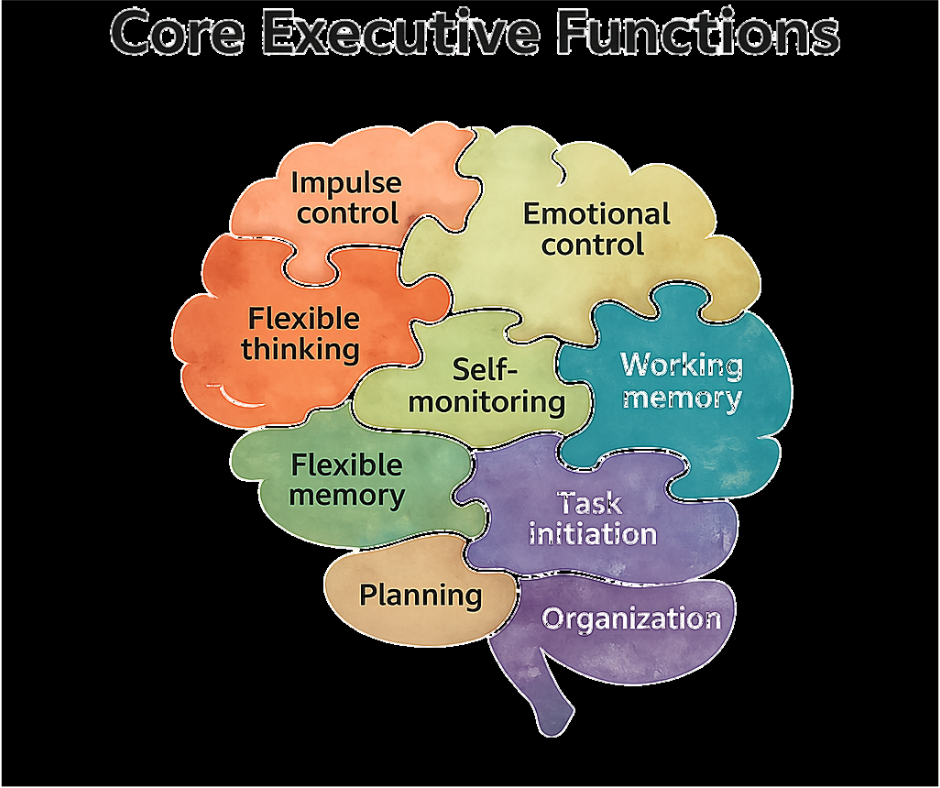
Think of executive functioning like the CEO of your brain. It's the set of mental skills that help you plan, start tasks, manage your time, control your emotions, and follow through on goals. It's not just one thing, it's a whole team of skills working together behind the scenes.
Executive functioning includes skills like: working memory (holding information in your head while you use it), cognitive flexibility (switching between tasks without melting down), impulse control, emotional regulation, planning, and task initiation. When these skills work well, daily life feels manageable. When they don't, especially in neurodivergent brains, everyday tasks can feel exhausting and overwhelming.
Executive functioning challenges are neurological, not moral. A study published in the Proceedings of the National Academy of Sciences (PNAS) found that the prefrontal cortex in individuals with ADHD may develop up to three years later than in neurotypical individuals.You weren't failing, your brain was still catching up.
2. Why Traditional Advice Doesn't Work for Neurodivergent Brains
"Just use a planner.”
“Set an alarm.”
“Make a to-do list."
These tips work great for neurotypical brains. For neurodivergent people, they often feel like putting a band-aid on a broken leg. Not because you're not trying, but because your brain needs different tools.
Traditional productivity systems assume you can start a task whenever you decide and that reminders will automatically lead to action. But for people with ADHD or autism, none of those assumptions hold up consistently. You might have time blindness, a real neurological experience where hours disappear or minutes feel like hours. You might struggle with task initiation even for things you genuinely want to do.
Research shows that people with ADHD often have a harder time connecting what they’re doing now with future outcomes, a concept known as delay discounting. In simple terms, future consequences don’t feel as real or urgent, which is why advice like “just think about the consequences” usually doesn’t land. The brain is processing that connection differently.
3. How ADHD, Autism, and Related Conditions Affect Daily Life
Neurodivergent isn’t a single category. ADHD, autism spectrum disorder (ASD), dyslexia, dyscalculia, and sensory processing disorder are all distinct, and they often overlap. Research from the Frontiers in Psychiatry suggests that around 50–70% of autistic people also have ADHD. That combination can make day-to-day life more complex to navigate.
Here's what this can look like in real life:
- You forget to eat because you hyperfocused on a project.
- You want to start your homework but can't figure out how to begin.
- You're exhausted by social situations that others find easy.
These aren't personality flaws, they're symptoms of how your brain processes and interacts with the world.
4. The Shame Cycle, And How to Finally Break It

This pattern shows up a lot. You struggle with something, you get criticized by others or yourself, and shame follows. That shame makes it harder to function, which leads to more struggle. Then the cycle repeats. It’s often called the shame cycle, and it’s one of the more painful parts of growing up neurodivergent in systems that weren’t designed for your needs.
Research from The Times suggests that rejection sensitive dysphoria (RSD), an intense emotional response to perceived failure or criticism, may affect up to 99% of adults with ADHD. It’s not “being too sensitive,” it’s a real neurological response that can feel intense and hard to manage. It’s linked to differences in emotional regulation in the ADHD brain. Shame can also interfere with the prefrontal cortex, the part of the brain involved in planning and control. That’s part of why executive dysfunction often gets worse in moments of shame.
Breaking the cycle starts with one radical move: replacing shame with curiosity. Instead of "Why can't I just do this?" try "What does my brain need right now to make this possible?" That small shift opens the door to real, sustainable change.
5. Practical Tools and Strategies Built for Your Brain
The good news? There are tools and strategies specifically designed for how neurodivergent brains work. The key is experimenting to find what fits YOUR brain, not adopting someone else's perfect morning routine.
Some strategies that many neurodivergent adults find helpful:
- Body doubling: Working alongside another person (even on video) to help activate focus.
- Time blocking with buffers: Scheduling tasks in chunks with extra time built in, because time blindness is real.
- Visual timers: Find visual timers on apps or YouTube that let you actually see time passing.
- Task chunking: Breaking one overwhelming task into small steps.
- Sensory accommodations: Noise-canceling headphones, fidget tools, or movement breaks aren’t indulgences - they’re tools that make focus and regulation easier.
- The "good enough" standard: Perfectionism makes it harder to finish anything. An 80% completed task is always better than a perfect task that never got started.
Remember: the goal isn't to fix your brain. It's to build a life that works WITH your brain. This is where personalized support, like neurodivergent coaching, can make a profound difference.
6. Building Routines That Actually Stick
Routines are often sold as "just do it every day and it becomes automatic." For neurodivergent adults, that advice misses the mark. Habit formation can take significantly longer, and without the right scaffolding, even a routine you love can fall apart.
The key isn’t more discipline, it’s better design. Lower the friction by preparing in advance, like laying out gym clothes the night before. Use “if-then” planning, for example: “If it’s 8 AM and I’m at my desk, I’ll open my task list.” Connect new habits to existing ones, a practice called habit stacking. And don’t try to fix everything at once. Pick one routine, keep it small, and start there.
Self compassion, rather than self criticism, is what actually helps people stick with habits over time. When a day gets missed it doesn’t need to turn into “I failed.” It can simply be, “I’m human, and I can start again tomorrow.”
7. The Power of Your Support System

You were not meant to figure all of this out alone. One of the most common, and painful, experiences for neurodivergent adults is feeling like they should be able to manage everything independently because other people can. The reality is that many systems are built around neurotypical ways of thinking and functioning. Needing support isn’t a weakness, it’s a practical response to that mismatch.
A strong support system might look like a therapist who understands neurodivergence, an accountability partner, a trusted friend who checks in without judgment, online communities of people with shared experiences, or a coach who specializes in executive functioning.
8. How Coaching Can Be a Life-Changing Tool for Neurodivergent Adults
Traditional therapy explores why, coaching focuses on what's next. Neurodivergent coaching bridges the gap between knowing what you need to do and actually being able to do it. It's practical, strength-based, and built around how YOUR brain works, not a one-size-fits-all template.
Grow Autism Coaching specializes in working with autistic and ADHD adults, along with the families who support them. Our coaching is rooted in compassion, real-world strategy, and deep understanding of how ADHD, autism, and executive functioning challenges show up in daily life. We meet you where you are, not where you "should" be.
With our coaching support, clients work on:
- Shifting from shame to self-awareness and confidence
- Creating routines, boundaries, and communication strategies that stick
- Navigating major life transitions: college, jobs, relationships, and independence
Ready to start? Book your FREE consultation call with Grow Autism Coaching here.

⭐ Bonus Tip: Give Yourself the "Diagnosis Grief" Space
Many neurodivergent adults receive their diagnosis later in life, sometimes in their 20s, 30s, or even later. It's common to feel a complex mix of emotions: relief, grief, and anger.
All of those feelings are valid, give yourself permission to process them. A late diagnosis isn't the end of the story, for many people it's the beginning of finally understanding themselves.
A Different Brain, Not a Broken One
Let's recap what you've learned:
- Executive functioning is the set of brain skills that makes daily life manageable and for neurodivergent brains, these skills work differently.
- Traditional advice fails because it was built for a different kind of brain.
- The shame cycle is real and replacing shame with curiosity is the starting point for change.
You've also learned that the right tools, routines, and support systems can transform daily life. Coaching can also be the bridge between knowing what you need and actually getting there.
Many of the challenges here come from trying to operate in systems that weren’t built with your brain in mind. There’s nothing wrong with needing a different approach, the real shift is finding what works for you and not doing it alone.
Frequently Asked Questions (FAQs)
Q: What is executive functioning in simple terms?
Executive functioning is the group of mental skills that help you plan, organize, start tasks, manage time, and regulate emotions. Think of it as the management team of your brain. When it works well, daily life feels smooth. When it doesn't, especially in neurodivergent people, even small tasks can feel impossible.
Q: Can executive functioning improve over time?
Yes! The brain is neuroplastic, meaning it can develop and adapt. With the right strategies, supports, and coaching, executive functioning skills can improve significantly. Progress may look different than it does for neurotypical people, but it is absolutely possible and it's happening for people every day.
Q: How is neurodivergent coaching different from therapy?
Therapy often focuses on understanding and processing the past, while coaching is action oriented and future focused. A neurodivergent coach helps you build real-world skills, systems, and strategies tailored to how YOUR brain works. Many people benefit from both and they complement each other well.
Q: I just found out I’m autistic as an adult. Where do I start?
Start with curiosity and compassion for yourself. Learning about autism in adulthood can help you make sense of patterns you’ve likely carried for years. Give yourself time to understand how it shows up in your daily life, and connect with autistic communities who share lived experience. If it feels helpful, working with a coach or professional who specializes in neurodivergence can also help you figure out practical next steps.
Q: Is Grow Autism Coaching right for me if I'm an adult who was just diagnosed?
Absolutely. Late diagnosis is incredibly common, and it comes with its own unique set of emotions and questions. Our coaching is designed to meet you exactly where you are, whether you've known about your neurodivergence for years or just received a diagnosis. Book a free consultation call and let's talk about what's possible for you.
