
Your Daughter Was Just Diagnosed With Autism: 8 Practical Next Steps for Parents
The day your daughter receives an autism diagnosis can feel like the ground shifts beneath you. You might feel relief, grief, fear, or overwhelm. You might even feel all of those things at once, that is completely normal.
Here is what you need to hear first: your daughter is still the same person she was yesterday. The diagnosis does not change who she is. It gives you a clearer map to understand her brain, access the support she deserves, and build a life that fits her.
A 2022 study from the CDC found that approximately 1 in 31 children in the United States is diagnosed with autism spectrum disorder (ASD). Girls, however, are still diagnosed at far lower rates than boys. Now that your daughter has a diagnosis, you have a clearer understanding of her needs and the support available.
This guide walks you through 8 practical, research-backed steps to take after an autism diagnosis in girls - from understanding what the diagnosis means, to building the right support team, and to taking care of yourself along the way.
What You Will Learn in This Article
- Autism in girls: signs and traits
- Understanding autism evaluation results
- Early intervention for autism
- Autism therapies for girls
- Telling your child about an autism diagnosis
- Parent support for autism
- Advocating for your autistic child at school
- Long-term support for autistic females
1. Understand Why Autism in Girls Looks Different
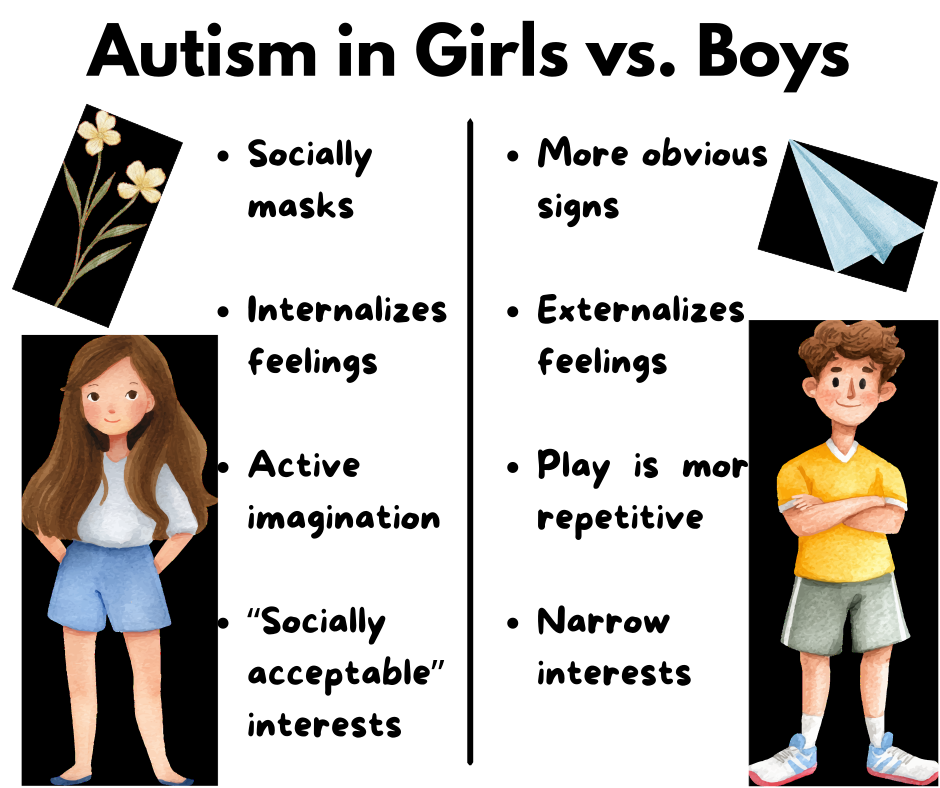
Before you can fully understand your daughter's diagnosis, it helps to understand why autism in girls is so often missed, misunderstood, or misdiagnosed in the first place.
Autism research has historically been conducted on male subjects, which means the diagnostic criteria were built around how autism presents in boys and men. Girls often show a quieter, more internal version of autism that can fly under the radar for years.
The numbers tell the story: According to Epic Research, the median diagnosis age for girls has remained stuck at around age 8, while boys have improved to age 5. One in four women are not diagnosed until age 19 or older.
Girls on the spectrum often have strong social instincts and learn to "mask" their traits - copying peers, scripting conversations, and working hard to appear "normal." This masking makes autism harder for clinicians to catch, but it also means your daughter may have been carrying a hidden load for years.
Understanding this is important because it shapes the kind of support she needs. Her autism may not look like the textbook version, but it is still real and still requires support.
2. Read and Understand Her Evaluation Results
After the diagnosis, you will receive a written evaluation report. This document can be dense and filled with clinical language, but it is one of the most important tools you have. Take your time with it.
Most autism evaluations for girls will include:
- A developmental history covering early childhood behavior
- Standardized assessment scores (such as the ADOS-2 or ADI-R)
- Cognitive and language testing results
- Observations from the clinician
- Recommendations for therapy and school supports
Ask the diagnosing clinician to walk you through the results in plain language. Do not leave the appointment without understanding what her support level means and what the recommendations are specifically for girls her age.
Important for girls specifically: Because autism in girls is often under-recognized, some evaluators still use male-centered frameworks. If the report recommendations feel generic or do not address the unique way autism presents in girls, it is okay to ask questions or seek a second opinion from a clinician who specializes in female autism.
Keep multiple copies of the evaluation report. You will need it for school IEP meetings, therapy referrals, insurance, and future appointments. This document is the key that unlocks services for your daughter.
3. Start the School Conversation Right Away

One of the first and most impactful actions you can take is contacting your daughter's school. Under the Individuals with Disabilities Education Act (IDEA), children with autism are entitled to a Free and Appropriate Public Education (FAPE), including individualized support services.
If your daughter is under age 3, contact your state's Early Intervention program immediately. Early intervention is the most effective way to support development, and children under age 3 qualify for free services even without a full diagnosis.
An IEP (Individualized Education Program) is a legally binding plan for children who need specialized instruction and services, it outlines specific goals, therapies, and accommodations the school is required to provide.
A 504 Plan is for children who do not need specialized instruction but do need accommodations to access learning equally, think extra time on tests, a quiet workspace, or movement breaks built into the day.
Every child is different, and the right plan depends entirely on your daughter and where she struggles. Before her school meeting, spend time observing her - at home, during homework, in social situations. Where does she get overwhelmed? Where does she shut down? Where is she working twice as hard as her peers just to keep up? Bring those observations to the meeting. You are her most important source of information.
If she qualifies for an IEP, here are some things you might consider requesting
- Speech therapy for communication and social language
- Occupational therapy for sensory and fine motor needs
- Social skills support or a small social group
- Sensory accommodations such as a quiet space or scheduled movement breaks
- Written rather than verbal instructions
- Extended time on tests or assignments
- A check-in system with a trusted staff member
This list is a starting point, not a checklist. Not every child needs all of these and your daughter may need something not listed here at all. The goal of the IEP or 504 meeting is to build a plan around her, not a template.
Many autistic girls are high-maskers, meaning they may appear to be doing fine academically while struggling enormously internally. Advocate for support even if her teachers say she seems okay. You know your daughter best.
4. Build a Therapy and Support Team
A strong support team makes an enormous difference in outcomes for autistic girls. The types of therapy that are most helpful will depend on your daughter's age, her specific needs, and what was recommended in her evaluation.
Applied Behavior Analysis (ABA)
ABA is widely recognized as an evidence-based approach for supporting autistic children, with research showing it can help build skills, improve communication, and support daily functioning. As with any therapy, the quality and approach can vary, so it’s important to find a provider who aligns with your child’s needs
Speech-Language Therapy
Even girls who seem to communicate well may struggle with the social use of language - understanding sarcasm, reading between the lines, and navigating conversations. A speech therapist can work specifically on these pragmatic language skills.
Occupational Therapy (OT)
OT addresses sensory sensitivities, fine motor skills, and daily living tasks. Many autistic girls are deeply affected by sensory overwhelm, and an OT can help identify your daughter's sensory profile and build practical strategies.
Neurodiversity-Affirming Therapy & Coaching
Look for a therapist who understands autism and uses a strengths-based approach to support mental health needs such as anxiety and depression. An autism coach can complement this by focusing on practical strategies, skill-building, and day-to-day support for both the child and the parent.
5. Tell Your Daughter About Her Autism Diagnosis
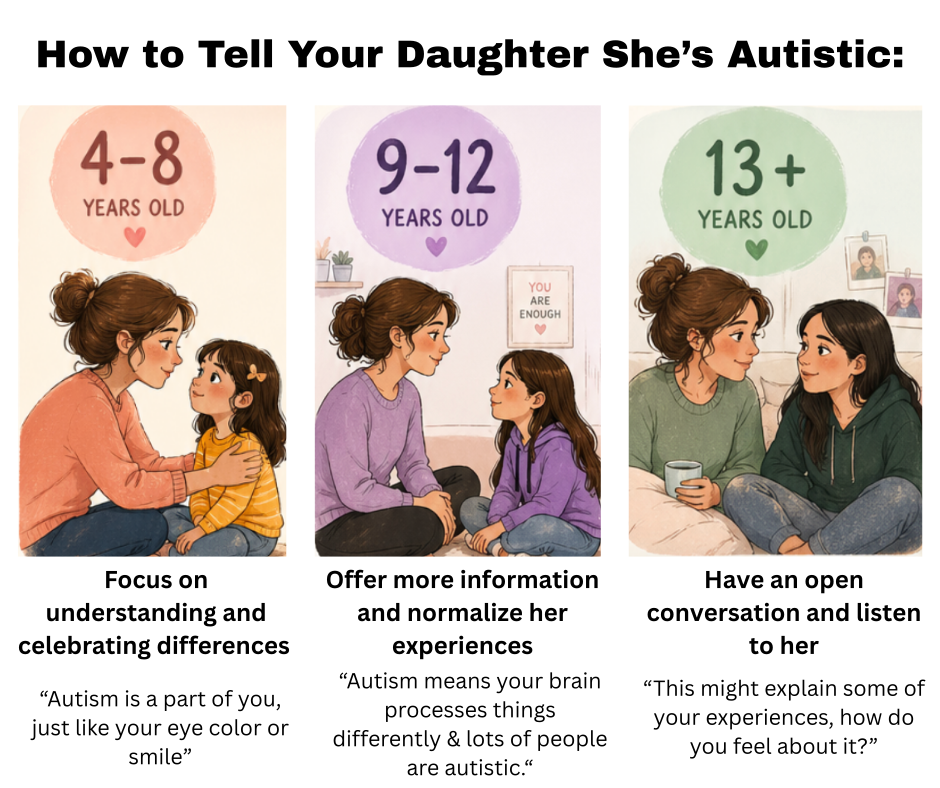
One of the most important conversations you will have is telling your daughter she is autistic. How you frame this conversation shapes how she sees herself for years to come.
Research from Frontiers in Psychology shows that autistic individuals who understand their diagnosis have better mental health outcomes, stronger self-advocacy skills, and a clearer sense of identity. Age-appropriate honesty is typically the most effective approach.
For younger children (ages 4–8): Keep it simple. "Your brain works in a special way called autism. It means some things come really easily for you, and some things take more work. We are going to learn all about it together."
For older girls (ages 9–12+): Be more direct. Share what autism means, explain why she was evaluated, and validate her feelings. Let her ask questions. Give her books, videos, or social media communities with other autistic girls to explore.
Emphasize her strengths. Talk about the things autism makes her remarkable at - her deep interests, honesty, creativity, and empathy. The goal is for her to see autism as a part of who she is, not as something wrong with her.
6. Learn Her Sensory and Communication Profile

A helpful place to start is learning your daughter’s unique sensory and communication profile. Autism is not one-size-fits-all, and what helps one autistic girl may not help another.
Sensory sensitivities are very common in autistic girls and women. They can involve sound, light, texture, smell, taste, clothing, and crowds, and may present as meltdowns, shutdowns, or a child who seems ‘overreactive’ to everyday experiences others don’t notice.
Ways to learn about her sensory profile:
- Ask her occupational therapist for a sensory profile assessment
- Keep a log for two weeks of what triggers meltdowns or shutdowns
- Notice what she gravitates toward and what she avoids
- Ask her directly, in calm moments, what feels overwhelming
Once you understand her sensory profile, you can start making changes at home. Noise-cancelling headphones, weighted blankets, soft clothing without tags, predictable routines, and visual schedules can all dramatically reduce her daily stress load.
Communication is equally individual. Some autistic girls are highly verbal but struggle with the social rules of conversation. Others may go nonverbal when overwhelmed. Learning her specific communication patterns and creating a home where all forms of communication are accepted builds trust and reduces anxiety.
7. Become Her Most Powerful Advocate
Parents of autistic girls quickly discover that advocacy is a skill you build and use constantly. From IEP meetings, to doctor's appointments, to family gatherings, you will regularly need to speak up for your daughter's needs.
This can feel exhausting and sometimes isolating. You may encounter professionals who underestimate her because she masks well. You may face family members who say "she seems fine to me." You may feel like you are always fighting to be believed.
Practical advocacy strategies:
- Document everything - keep records of meetings, emails, and your daughter's behaviors and progress
- Learn your rights under IDEA and the Americans with Disabilities Act (ADA)
- Bring an advocate to IEP meetings if needed
- Ask for everything important in writing
- Trust your instincts, you know your daughter better than any professional does
Connect with other parents of autistic girls. Parent communities, both online and local, are one of the most valuable resources available. Facebook groups and community support groups can be especially helpful.
Advocacy also means advocating for your daughter's identity. This can also mean correcting the idea that her diagnosis is something to be fixed. Your autistic daughter’s neurodivergent brain has a different way of thinking that brings strengths like creativity, strong focus, and a unique way of seeing the world.
8. Supporting Yourself as a Parent of an Autistic Daughter

This step often gets overlooked but it’s very important. Supporting an autistic child can be both meaningful and demanding, so it’s easy to put your own needs last in the process. Taking care of yourself isn’t separate from supporting your daughter, it helps you stay steady as you navigate everything that comes with her diagnosis.
Research shows that parents of autistic children experience higher levels of stress, anxiety, and burnout than other parents. A 2026 study published in Autism Research found a link between parental stress and child outcomes, suggesting that caregiver wellbeing is an important part of the overall support system.
Give yourself permission to grieve. Not because autism is a tragedy, but because your picture of the future may need to be reshaped. That process takes time, and it is completely valid.
Practical ways to support yourself:
- Work with a therapist or autism-informed coach
- Join a parent support group (in person or online)
- Ask for and accept help from family and friends
- Pay attention to caregiver burnout and your own limits
- Notice and celebrate small wins along the way
You don’t need to figure it all out at once, just take it step by step.
✨ Bonus Tip: Consider Autism Coaching for Your Family
After a diagnosis, many families benefit from working with an autism coach who specializes in supporting autistic girls and their parents. Coaching differs from therapy in that it focuses on the present and future. This includes building daily strategies, understanding your daughter’s needs, and supporting you as a confident advocate.
At Grow Autism Coaching, we work specifically with autistic individuals and their families to build systems that actually work. If you are feeling overwhelmed and want a clear next step, we offer a free consultation call to talk through your daughter's situation and explore whether coaching is the right fit for your family.

Getting your daughter’s autism diagnosis is not the end of the story. It is the start of a clearer understanding of who she is and what she needs.
The path ahead will not always be easy. There will be school meetings that feel exhausting, moments of overwhelm, and times when things feel harder than they should. There will also be progress, connection, and moments where you see your daughter’s strengths more clearly.
Research shows that early support, informed parents, and a coordinated care team can make a meaningful difference for autistic girls. Taking the time to learn and understand her needs is already a strong first step.
You do not have to do this alone. There are other parents, professionals, and autistic adults who understand this experience and can offer support along the way.
Frequently Asked Questions (FAQs)
Q: My daughter was just diagnosed with autism. Where do I start?
Start by going through her evaluation report slowly and focusing on the key findings. If anything is unclear, reach out to the clinician who completed the assessment and ask them to walk you through it in plain language. These reports are often full of clinical terms and can be hard to interpret on your own, so it’s completely normal to need clarification.
Q: How is autism different in girls than in boys?
Autism in girls often looks different than in boys, which can make it harder to recognize and lead to later diagnoses. Girls are more likely to mask by copying social behavior, and they may show more internal signs like anxiety, sensory sensitivities, or overwhelm. Their interests can also appear more socially typical when compared to boys.
Q: What therapies are most helpful for autistic girls?
ABA, speech-language therapy, and occupational therapy are all helpful supports. Every child is different so the best approach is individualized and guided by her evaluation recommendations. Talk to your daughter’s doctor and teachers to see what they recommend.
Q: How do I tell my daughter she has autism?
Tell her with honesty, warmth, and pride. For younger children, keep the explanation simple and positive. For older girls, be direct and give her space to ask questions. Emphasize her strengths and frame autism as a different, not lesser, way of experiencing the world.
Q: What if I feel overwhelmed by everything after the diagnosis?
That is completely normal and valid. Start by focusing on the next week, not the next 18 years. Connect with other parents, find a therapist for yourself if needed, and remember that you do not have to have everything figured out right now.
