
8 Things Every Parent Needs to Know About LRE (Least Restrictive Environment) for Their Autistic Child
Have you ever walked out of an IEP meeting thinking, "I'm not sure that classroom is right for my child?"
So many parents of autistic children feel like something is off; their child isn't growing, isn't happy, or isn't being challenged - but they don't know what to do about it. Here's the thing: you have more power than you think and your child is supposed to grow in school - no matter their ability level.
Autism now affects 1 in 31 children in the United States, and with so many kids in the special education system, school placement decisions matter more than ever. One of the biggest pieces parents don't understand is something called the Least Restrictive Environment (LRE). It's written into federal law and it directly affects where your child sits in school every single day.
This guide breaks down what LRE is, how it affects your child, and what to do if you suspect your child’s placement may need to change.
Here's what we'll cover:
- What LRE means
- The different classroom options available to your child
- Signs your child may be in the wrong classroom
- Your rights as a parent under IDEA
- How to request a placement change
- How behavior plans can unlock academic growth
- What "appropriate" actually means in special education
- How to speak up confidently at IEP meetings
1. What "Least Restrictive Environment (LRE)” Means

Least Restrictive Environment can sound confusing, but the idea is simple. LRE is the environment where your child gets the education they need, while still being around kids without disabilities as much as possible.
This comes from a federal law called IDEA, the Individuals with Disabilities Education Act. Under IDEA, a child can only be moved out of a regular classroom when their disability is severe enough that even with extra help and supports, the regular classroom still isn't working.
Here's what surprises a lot of parents: LRE does NOT mean your child must always be in a regular classroom. It just means the placement needs to be the best fit for your child's current needs, whatever that looks like.
Think of it like shoes - a pair that's too small isn't comfortable, even if it looks fine. Your child's classroom should fit them.
2. The Different Classroom Options for Autistic Children
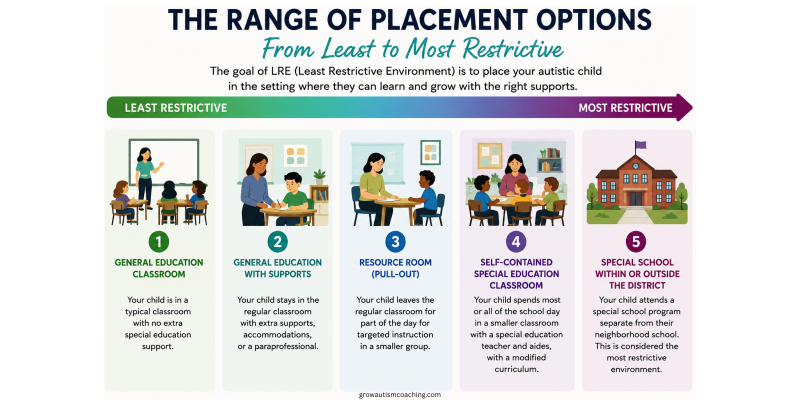
Placement isn't just "regular class" or "special ed class." There's actually a full range of options and your child's IEP team is required to consider all of them.
Options include general education classes, general education with extra supports, a mix of general and special education, self-contained special education classrooms, out-of-district placements, and home instruction.
Here's what those look like in real life:
Regular classroom with supports: Your child stays in a typical class but gets extra help, like a paraprofessional or accommodations.
Resource room (pull-out): Your child leaves the regular classroom for part of the day to get targeted instruction in a smaller setting with a special education teacher.
Self-contained special education class: Your child spends most or all of the school day in a smaller classroom with a special education teacher and aides, focused on a modified curriculum.
Special school within your district: Some districts have a special school that is only for students with an IEP, these vary by state and district so ask your principal or teacher about the details. This is usually considered the most restrictive environment.
The right placement isn't the one that sounds best, it's the one that actually works for your child right now. It will change as your child changes.
3. Signs Your Autistic Child May Be in the Wrong Classroom
This is what most parents are really searching for at midnight: "How do I know if my child is in the right classroom?" or "Why isn't my autistic child making progress in school?"
Your gut as a parent matters, here are the biggest red flags:
📉 No real academic progress. You may be among the first to notice your child has already mastered something at home that school is still working on, that's a sign the IEP may not be meeting your child's needs.
😰 More anxiety, meltdowns, or refusal to go to school. The classroom environment (too overwhelming or not stimulating enough) can directly affect how your child feels and behaves.
🔄 The same IEP goals, year after year. If goals aren't being passed off, the environment may not be the right match.
🧩 The classroom isn't the right academic level. Some kids with autism are very capable but placed in rooms designed for children with much higher support needs, or the opposite. Either way, it's not a good fit.
😐 Constant boredom or disengagement. If your child is bright and unchallenged, you'll often see it show up as behavior problems or shutting down.
Seeing two or more of these signs? It's time to request an IEP meeting.
4. Your Rights as a Parent Under IDEA
Here's something every parent needs to hear: you are not just a guest at your child's IEP meeting. You are a required, equal member of the team. Federal law guarantees this.
Under IDEA, parents have strong legal protections. You have the right to review your child's records, participate in every meeting about their education, and have your voice heard on placement decisions.
Here's a quick breakdown of what you're entitled to:
- Be notified before any placement change
- Disagree with a proposed placement
- Request an IEP meeting at any time
- Free mediation if you and the school disagree
- File for due process if needed
If you’re worried your child isn’t making progress or isn’t in the correct classroom, request a meeting and talk to your child’s teacher. They are there to help you with these things and most of the time a simple conversation goal a long way.
🔗 If this still feels like too much, Grow Autism Coaching helps parents figure out if their child is in the correct placement and can advocate for you at your next IEP meeting.
5. How Behavior Challenges Can Hide Your Child's True Potential
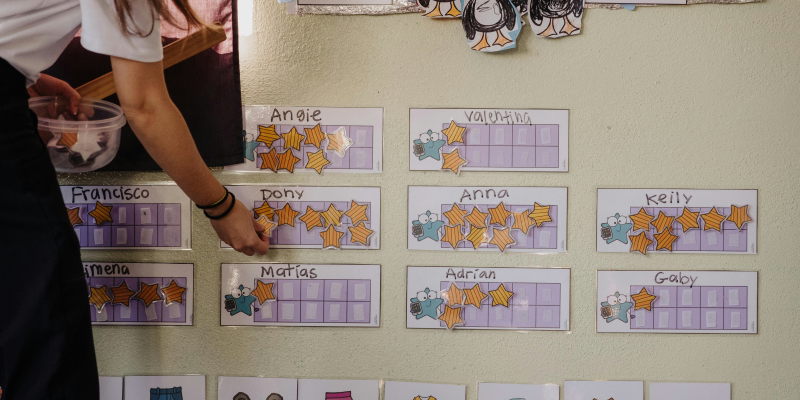
I once worked with a young boy with autism who was very bright and had some behavior challenges. He had just moved into the district and was placed in my classroom due to his behaviors.
We built a personalized behavior plan and as it started to work his behaviors decreased AND his academic progress exploded 📈 He was learning fast, he even passed off 4 out of 6 IEP goals in just a couple months. The more we challenged him, the more he rose to meet it.
Eventually it was clear: he had outgrown his classroom and he needed a more advanced setting. So I worked with his parents and the IEP team, and together we moved him to a classroom better equipped for his academic level. Today, he's thriving.
The takeaway? Behavior and academics are more connected than most people realize. When a child starts to grow behaviorally it often unlocks academic growth too, and that's when it's worth checking whether they're being challenged enough.
Research from the National Institutes of Health confirms that when a child's educational environment stops being the right fit, parents are usually the first ones to notice. Always listen to your gut, especially when it’s about your child’s future.
6. How to Request a Placement Change: Step by Step
You've noticed the signs. You know your rights. Now here's how to actually make something happen:
Step 1: Write things down. Keep notes on what you're seeing - specific examples, dates, anything your child says about school. Real examples carry weight in IEP meetings.
Step 2: Request an IEP meeting in writing. Email the special education teacher and school administrator. Say you'd like to review your child's placement and why.
Step 3: Ask for the data. At the meeting, ask: How is progress being tracked? What does the data show? What supports have already been tried?
Step 4: Know your options if they say no. If you disagree with the team's decision, you can request free mediation, file a state complaint, or request a due process hearing.
Step 5: Bring someone with you. You're allowed to bring a support person - a friend, family member, or advocate to any IEP meeting.
A collaborative approach between parents and school staff almost always leads to better outcomes for the child. Go in as a partner first, but know your rights if things stall.
7. Every Child's Path Looks Different

Here's something that can be hard to hear but is so important: the right classroom for your child may not look like what you imagined - and that's okay.
Some autistic children thrive in a general education classroom with a little extra support. Others do so much better in a smaller, specialized setting where the pace, structure, and supports are built around kids like them. Neither path is better or worse, they're just different. What matters is that the placement fits your child.
"Appropriate" looks different for every single child. It depends on their IEP goals, their current skills, their behavior needs, and what supports are available. What works beautifully for one autistic child might be completely wrong for another, even if they have the same diagnosis.
One thing that helps a lot of parents feel better about a more specialized placement: your child doesn't have to be separated from their peers all day. Even if your child is in a self-contained special education classroom, they should still have opportunities to be around same-age peers throughout the day, things like:
🍽️ Lunch with their grade-level peers
🏃 Recess with kids their age
🎨 Special classes like PE, art, or music (when appropriate)
🎉 School assemblies and events
These moments of connection matter. They give your child a chance to build social skills and feel like a part of their school community, even if their academic setting looks different.
If your child is in a specialized classroom and those peer connection opportunities aren't happening, it's worth bringing up at your next IEP meeting.
The goal isn't the classroom you pictured. The goal is the classroom where your child can actually grow. Sometimes those are the same thing and sometimes they're not. Either way, your child deserves a placement that fits who they are right now.
8. How to Speak Up Confidently at IEP Meetings
IEP meetings can feel intimidating. You're surrounded by professionals, there's a lot of paperwork, and everyone seems very sure of themselves. But remember: you are the expert on your child. No one in that room knows them like you do. 💪
A few things that will help you walk in confident:
Ask for data. Schools should track IEP goal progress with real numbers. Ask to see the data and what it shows over time.
Ask "why" and "why not." If a placement is recommended, ask why it's the best fit. If you're requesting a change and being turned down, ask exactly why the current setting is still considered appropriate.
And above all - trust your instincts. If something feels wrong, keep pushing and asking. Your child is worth it.
🌟 Bonus Tip: You Don't Have to Figure This Out Alone

Navigating IEP meetings, school placements, and special education law is a lot - especially on top of everything else you're already doing as a parent.
Nobody hands you a manual when your child enters special education. You're just expected to show up and trust the process, this is where Grow Autism Coaching comes in. We help parents understand their rights, prepare for IEP meetings, and advocate with confidence.
👉 Grab a free consultation call here and let's talk about what your child needs.
You’ve Got This
Your child deserves a classroom that actually fits them. Understanding LRE gives you the tools to ask the right questions, spot the warning signs, and push for what your child truly needs.
The right placement isn't always the most inclusive one, it's the most appropriate one. And that decision should always include your input.
You know your child better than anyone in that IEP meeting - trust that, use these tools, and speak up. When parents advocate, kids thrive.
Frequently Asked Questions (FAQs)
Q: What does LRE mean in simple terms?
It means your autistic child should be with non-disabled peers as much as possible, but only if it's actually working for them. It's a legal requirement under federal law.
Q: Can I request a classroom change for my child?
Yes! You can request an IEP meeting anytime to talk about whether the current placement is still a good fit, as a team you will decide what the best placement is for your child. Placement depends on data and if your student is making progress. Request a meeting in writing and come with specific examples of why you think your child would benefit from a different placement.
Q: What if the school says no to my request?
Ask the school for their reasoning, you also have the right to free mediation or to file for due process. Grow Autism Coaching can also help you figure out next steps.
Q: Does my child have to be in a general education classroom?
No. The goal is the most appropriate setting for your child, which might be a specialized classroom if that's what they need. The IEP team decides this together with you.
Q: How often can placement be reviewed?
At least once a year as part of the IEP. But you can ask for a review anytime if your child's needs have changed.
