
How to Cope After a Late Autism Diagnosis
What if the explanation for a lifetime of confusion didn’t come until your 20s, 30s, or even later, when you finally discover you’re autistic? For many adults, that realization comes much later than expected. If you’ve recently discovered you are autistic, or you suspect you might be, you are not alone. This guide is here to help and point you in the right direction.
Epic Research found that in 2024, nearly 1 in 4 female patients with autism spectrum disorder (ASD) were diagnosed as adults aged 19 or older, more than double the rate for males. And according to JAMA Network Open, young adults showed the greatest increases in autism diagnosis rates of any age group between 2011 and 2022. A late autism diagnosis is not rare, it is increasingly common.
A late autism diagnosis can feel overwhelming at first, but it can also be the moment everything finally starts to make sense. In this article, you’ll find 8 powerful, research-backed ways to process your autism diagnosis, rebuild your sense of self, and begin to thrive as an autistic adult.
What You’ll Learn in This Article:
- Why autism is often diagnosed later in life
- How to process a late diagnosis emotionally
- What autism masking is and how it affects you
- How to rebuild your identity
- Practical tools for daily challenges
- How to find your autistic community
- Self-advocacy and accommodations
- Routines that actually work for an autistic brain
1. Why Autism Is Often Diagnosed Late in Adulthood
First, let’s be clear: a late autism diagnosis is not a failure. It is a reflection of decades of outdated research, systemic gaps, and a diagnostic framework built almost entirely around young boys. If you are a woman, a person of color, or someone who has always appeared to “cope fine” on the surface, the odds were stacked against you getting an early diagnosis.
For decades, the diagnostic criteria for autism were built around how autism presents in young children, leaving countless adults without answers for years. A 2025 review published in Autism Research found that late diagnoses are significantly more common among racial and ethnic minorities and those living in rural communities - pointing to deep, systemic gaps in access and awareness. Many autistic adults spent years being told they had anxiety, depression, ADHD, or borderline personality disorder instead. These misdiagnoses aren't just frustrating, they delay access to the right support and reinforce the false belief that something is personally wrong with you (it isn’t). A late autism diagnosis is a systemic failure, not a personal one.
Practical step: Write down your diagnostic journey. Listing out all the previous diagnoses or explanations you were given can help you reframe your past experiences through an autism lens and begin making sense of what you’ve been through.
2. Allow Yourself to Feel All of It

Receiving a late autism diagnosis is rarely a simple moment. It is an emotional avalanche. Relief, grief, anger, confusion, and even joy can all show up at once, sometimes within the same hour and all of it is valid.
A study published in Health Psychology and Behavioral Medicine explored the experiences of adults who received a late autism diagnosis and found that participants described a “eureka moment” of relief alongside periods of shock, disbelief, and grief. Many said things like, “Everything from the last 30 years made sense,” while others described going through stages of anger and asking, “why me?” Both reactions are completely normal.
Think of a late diagnosis like finding out you’ve been running a marathon in the wrong shoes your entire life. There’s relief in finally knowing why it was so hard but there’s also grief for the blisters you didn’t have to get. Both of these feelings deserve space.
Practical step: Give yourself permission to grieve. Consider journaling your emotional responses in the days and weeks after your diagnosis. There is no right timeline for processing a late autism diagnosis. Therapy or coaching with a neurodiversity-affirming therapist/coach can also be deeply helpful during this time.
3. Recognize and Unmask Your Autistic Self
One of the most significant reasons autistic people are diagnosed late is masking, the conscious or unconscious practice of suppressing autistic traits to blend in with neurotypical society. Masking can look like:
- forced eye contact that felt unnatural
- scripted conversations in your head before social events
- suppressing the urge to stim (rock, tap, or fidget) in public
The research on masking and autistic adults can be validating. A study published in Autism in Adulthood found that autistic masking is linked to mental health difficulties, burnout, and even thoughts of suicide. A separate study in Autism (SAGE Journals) found that higher levels of autistic masking are associated with increased depression, anxiety, and interpersonal trauma. Masking keeps you safe in a world that misunderstands autism, but it comes at a serious cost.
For people who discover their autistic identity later in life, it is common to have masked unconsciously for years. This makes it difficult to know what kind of person they would have been without that suppression and can trigger an identity crisis. However, it can also be the beginning of a liberating journey of self-discovery.
Practical step: Start small. Identify one autistic trait you have been suppressing (a stim, a need for quiet, or a preference for direct communication) and practice allowing it in a safe setting. Unmasking is not an event, it’s a gradual and deeply personal process.
4. Rebuild Your Identity With Autism as a Core Part of You
A late autism diagnosis does not just change your future, it can also reshape how you understand your past. Many autistic adults describe a process called retrospective re-evaluation, where they look back at their entire life and reinterpret experiences through an autism lens. This can look like:
- That job you lost because open offices were unbearable.
- The friendships that fizzled because socializing left you exhausted for days.
- The meltdown you had that others called “overreacting.”
Frontiers in Psychology found that autistic identity is closely linked to self-esteem and mental well-being. It also found that over time, people tend to feel more at peace with being autistic. Rebuilding identity after a late autism diagnosis is genuinely demanding work, but research shows most people are capable of it when they finally have an accurate understanding of their own brain to build from.
Practical step: Try writing an “autism autobiography.” Go back through your life and annotate key memories with your new autistic understanding. This isn’t about dwelling on the past, it’s about making sense of your experiences in a new way.
5. Build Routines and Systems That Work for Your Autistic Brain

Autistic brains often thrive on structure, predictability, and clear expectations. If you have always found comfort in routines but felt guilty or “weird” about needing them, you can let that guilt go. Routines are not a crutch, they are a tool. For autistic adults they are often essential for managing energy, reducing anxiety, and preventing burnout.
One particularly useful framework for autistic adults is the “energy accounting method.” This involves tracking your energy levels throughout the day, identifying which activities drain you (often social interaction, sensory stimulation, or unexpected changes) and which recharge you (often solitude, special interests, or movement). By understanding your personal energy budget, you can plan your days more sustainably and prevent the crash-and-burn cycle that many autistic adults know too well.
Research from PMC Psychiatry on resilience in autistic adults found that adjusting daily routines was one of the primary coping strategies used by autistic adults to manage stressors. Participants also emphasized the importance of recognizing their own strengths and limitations as a key part of developing resilience.
Practical step: Spend one week tracking your energy levels at three points each day (morning, afternoon, evening). Note what activities came before any dips or surges. Use this information to adjust your schedule in a way that works better for you.

Receive a FREE Energy Tracking Worksheet Here
Fill out this form and the energy tracking worksheet will be sent directly to your email!
Receive my monthly tips and local resources. Unsubscribe anytime.
6. Navigate Relationships, Work, and Social Life as an Autistic Adult
One of the most challenging aspects of a late autism diagnosis is looking back at relationships and workplaces that were painful and realizing why. Autistic adults often feel socially drained, miss unwritten social rules, and tend to communicate more directly. In a world that relies on subtle cues, this can be misunderstood by others but it doesn’t mean you’re a bad friend, partner, or employee - it just means you communicate differently.
Late-diagnosed autistic individuals often struggle with feelings of alienation in social settings. But open, honest communication can transform relationships. When you explain your sensory sensitivities or social fatigue it helps others understand that it’s not a lack of interest, it’s a way of taking care of yourself.
In the workplace, autistic adults are increasingly protected by disability law in many countries. Reasonable workplace accommodations, such as quiet workspaces, written instructions, flexible scheduling, or reduced sensory distractions, can make an enormous difference. You have the right to request these. More companies are building neurodiversity hiring initiatives that recognize the strengths many autistic adults bring, like focus and attention to detail.
Practical step: Write down three things that make social or work situations difficult for you and three accommodations that would help. Practice communicating these needs to one trusted person in your life, self-advocacy starts with one conversation.
7. Find Your Autistic Community

One of the most healing things an autistic adult can do after a late diagnosis is find their people. Online and in-person autistic communities offer something that no therapy session alone can provide: the experience of being around people who just “get it.” No masking required, no need to explain why fluorescent lights are unbearable or why you need to leave a party after 20 minutes.
A study on resilience and coping in autistic adults found that having a strong community and supportive network was key to building self-advocacy and confidence. Participants described community as a key source of resilience and online spaces have made it easier for people to find autistic communities they didn’t know existed.
Social media, Reddit (r/autism, r/AutisticAdults), Facebook groups, Discord servers, and organizations like the Autistic Self Advocacy Network (ASAN) are excellent starting points. Local autism organizations and mental health clinics also often run support groups specifically for autistic adults.
Practical step: Search for one online autistic community this week. You don’t have to introduce yourself on day one, just spend a few days simply reading and observing.
8. Seek Professional Support Who Actually Understand Autism in Adults
Not all therapy is the same, and for autistic adults, that matters. Approaches that focus on neurotypical social norms or behavior can unintentionally reinforce the pressure to mask, rather than help. The right support understands your brain and works with it, not against it.
Treating anxiety or depression in late-diagnosed autistic adults without addressing masking, sensory overload, or ongoing social stress may help with symptoms, but not the root cause. Effective support is based on how autistic brains actually work, not neurotypical assumptions.
The right support can make a big difference. A neurodiversity-affirming therapist helps you understand and process your emotions in a way that fits how your brain works. Coaching can help you turn insight into action - clarifying your goals, building self-advocacy skills, and creating a life that fits you better.
How Autism Coaching Can Help After a Late Diagnosis

Coaching is different from therapy. While therapy often focuses on processing the past and managing mental health, coaching is future-focused. A neurodiversity-affirming autism coach works with you to identify your strengths, clarify your goals, and build practical strategies that actually fit your autistic brain - rather than pushing you to conform to neurotypical systems that were never designed for you.
For autistic adults navigating a late diagnosis, coaching can help with some of the most pressing post-diagnosis challenges:
- Identity & self-acceptance: Understanding yourself through your autistic experience, letting go of shame, and building a life that aligns with your authentic self.
- Career & workplace support: Identifying work environments where you can thrive, requesting accommodations with confidence, and leveraging your autistic strengths professionally
- Goal-setting & accountability: Breaking down overwhelming goals into manageable steps, building routines that stick, and having support to help you stay on track
- Self-advocacy skills: Learning how to clearly communicate your needs to employers, family members, and healthcare providers without masking or over-explaining
Unlike general life coaching, autism-specific coaching is built on a neurodiversity-affirming foundation. This means your autistic traits are never treated as problems to fix, they are the starting point for designing a life that genuinely works for you.
Working With Grow Autism Coaching
Grow Autism Coaching offers 1:1 coaching specifically designed for autistic adults, including those navigating a late autism diagnosis. With a neurodiversity-affirming approach at the core of every session, Grow Autism Coaching helps autistic adults work through the identity shifts that come with a late diagnosis, build self-acceptance, and develop practical strategies for thriving in work and life.
Whether you are trying to make sense of your autism diagnosis, figure out how to advocate for yourself at work, or simply find a space where you don’t have to mask or explain yourself, coaching can give you a structured, supportive path forward.
If you’re ready to stop pushing through a world that wasn’t built for your brain, book a free consultation here and take the first step toward a life that actually fits.
Practical step: When searching for a therapist or coach, ask directly: “What is your experience working with late-diagnosed autistic adults?” and “Do you take a neurodiversity-affirming approach?” The answers will tell you a great deal about whether they are the right fit.
🌟 Bonus Tip: Embrace Your Special Interests Unapologetically
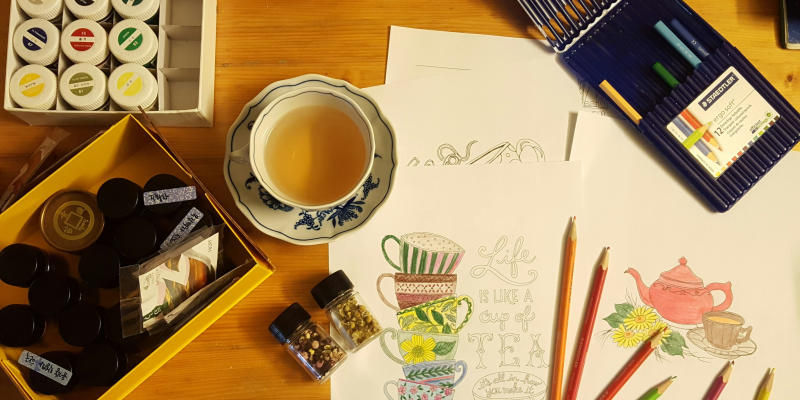
One of the greatest gifts of a late autism diagnosis is finally giving yourself permission to fully embrace your special interests - the topics, hobbies, or activities you can hyperfocus on with joy and intensity. Over time many people learn to hide the things that bring them the most joy, this is your permission to reconnect with them fully.
Special interests are a genuine strength. They are often the source of deep expertise, creativity, career success, and joy for autistic adults. Whether your passion is train schedules, ancient history, video game lore, or marine biology, give yourself permission to fully enjoy it without holding back.
You Are Not Too Late
A late autism diagnosis is not the end of a story, it’s the beginning of a much more honest one. Whether you just received your autism diagnosis last week or you’ve been sitting with it for a year, the path forward is the same: one step at a time.
You now understand why late autism diagnoses happen, how masking has shaped your life, and how to begin unmasking safely. You have tools for managing your energy, rebuilding your identity, navigating relationships and workplaces, finding your community, and accessing the right professional support.
The autistic adults who thrive are not the ones who figured out how to be neurotypical, they are the ones who figured out how to be unapologetically and authentically themselves. That journey starts here.
Frequently Asked Questions (FAQs)
Q: What is a late autism diagnosis?
A late autism diagnosis is when someone is diagnosed with autism in adulthood rather than in childhood or adolescence. This is increasingly common as awareness of autism in adults improves.
Q: How do people feel after a late autism diagnosis?
Many autistic adults experience a mix of relief, grief, confusion, and clarity after a late diagnosis. It can take time to process what the diagnosis means for identity and past experiences.
Q: Is a formal autism diagnosis necessary, or is self-diagnosis valid?
Both have value. A formal diagnosis gives you access to legal accommodations, workplace protections, and certain support services. Self-identification is widely accepted within autistic communities and can be an important first step, especially given the significant barriers many adults face in accessing formal evaluation. If you can access a formal assessment, it is worth pursuing but self-identification should never be dismissed as invalid.
Q: Where do I start after a late autism diagnosis?
Start by giving yourself time to process, you don’t need to change everything at once. Connecting with online autistic communities, learning about autism in adulthood, and finding a neurodiversity-affirming therapist or coach are excellent first steps.
Q: Why are so many autistic people diagnosed late in life?
Many adults are diagnosed late because autism was historically studied in children, especially boys. People who mask their traits or have high support needs that are less visible are often missed in childhood.
Q: Can a late autism diagnosis actually improve your quality of life?
Yes and research backs this up. Psychology Today notes that late autism diagnosis has shown meaningful improvements in self-understanding, quality of life, and mental health for the majority of adults studied. The key factor is access to appropriate post-diagnostic support, which is exactly what resources like this blog are designed to provide.
Q: What is autistic masking?
Autistic masking is when someone consciously or unconsciously hides autistic traits to fit in socially. This can include forcing eye contact, rehearsing conversations, or suppressing natural behaviors like stimming.
