
What Are Procedural Safeguards? A Parent's Complete Guide to Special Education Rights
Under the Individuals with Disabilities Education Act (IDEA), every family of a child receiving special education services is protected by these safeguards. Yet many parents sit through IEP meetings feeling confused, unheard, or unsure of what they can even ask for. That changes today.
In this guide, you'll learn exactly what procedural safeguards are, what each section means in plain language, and how to use them to advocate confidently for your child. Knowledge is power and this guide puts that power in your hands.
Here's what we'll cover:
- Why procedural safeguards matter
- The 8 procedural safeguards
- A bonus tip on getting extra support
Why Procedural Safeguards Matter for Autism Families

If you've ever felt like the school held all the power in your child's IEP meeting, you're not alone. Many parents of autistic children describe feeling overwhelmed, outnumbered, or simply unaware of what they could ask for. Procedural safeguards exist specifically to change that dynamic.
Procedural safeguards are the legal ground rules for how you and the school work together. They don't tell the school what services to provide, that's what the IEP is for. Instead, they protect your right to be informed, to give or deny consent, to challenge decisions, and to resolve disagreements. Think of them as the rulebook that levels the playing field.
Parents are experts on their children and have much to contribute to the IEP process, even when it feels foreign to them. Federal law agrees, IDEA was specifically designed to give families an active voice in their child's education, not just a seat at the table.
When you understand these rights, you can ask the right questions, speak up when something isn't working, and make sure your child's needs stay at the center of every decision. The more informed you are, the more confidently you can partner with your child's school to get them the support they deserve.
These safeguards are tools built specifically for parents like you, read on to find out what each one means and how to use them!
#1: Your Right to Receive the Procedural Safeguards Notice
You are entitled to receive a copy of the procedural safeguards notice at least once per year. You also have the right to request a copy at any time.
Under IDEA, schools are required to provide you with a full explanation of all procedural safeguards available to you at least once a year.
Beyond the annual requirement, the school must also give you a copy when:
- Your child is referred for an initial evaluation
- You file a state complaint for the first time that school year
- You request a due process hearing for the first time that school year
- Your child faces a disciplinary removal that changes their placement
- You simply ask for one
When you receive your copy, take time to actually read through it and don't hesitate to ask your IEP team to walk through it with you. This is a great opportunity to ask questions and make sure you fully understand what each section means for your family.
💡 Pro tip: Keep a copy of your procedural safeguards notice in your child's education binder, alongside your IEP documents.
#2: Parent Consent Rights

One of the most important protections you have is the right to give or deny informed consent before the school takes certain actions involving your child.
Informed consent means you fully understand what you are agreeing to before you sign anything. The school cannot move forward with key steps without your written permission. Specifically, schools must get your consent before:
- Conducting an initial evaluation to determine if your child qualifies for special education
- Providing special education services for the first time under an initial IEP
You also have the right to withdraw consent at any time. If you withdraw consent for services, the school cannot override your decision.
Take your time before signing anything. It's completely okay to ask questions, take the document home to review, or talk to an advocate before making a decision. Your signature carries real legal weight, so making sure you feel confident and informed is always the right move.
#3: Prior Written Notice
Prior written notice (PWN) is one of the most powerful (and most overlooked) procedural safeguards available to parents of children in special education.
What is it? Prior written notice is a written document the school must give you any time they propose or refuse to do something related to your child's identification, evaluation, placement, or the services they receive.
For example, if the school wants to change your child's placement, add or remove a related service, or conduct a reevaluation they must notify you in writing before they make that change. On the flip side, if you request something and the school refuses, they must also provide written notice explaining why.
Prior written notice must include what the school is proposing or refusing, why they are proposing or refusing it, what other options they considered, and what data or reports they used to make the decision.
Why does this matter? It ensures clear, transparent communication between you and the school, and gives you a written record you can reference if questions come up later.
If you receive a prior written notice and something doesn't make sense, ask for clarification. if the school makes a change without providing written notice first? That's a violation of your rights.
#4: Independent Educational Evaluations (IEE)
When the school evaluates your child, they use their own team of professionals. But what happens if you disagree with their findings?
That's where the Independent Educational Evaluation (IEE) comes in.
If you disagree with the evaluation conducted by the school, you have the right to request an IEE of your student by someone who’s not a school employee at public expense, meaning the school pays for it. The school must either agree to fund the independent evaluation or file for a due process hearing to demonstrate that their own evaluation was appropriate.
The right to obtain an IEE is one of the most notable protections under IDEA. An IEE can be conducted by a qualified professional of your choosing, outside the school district.
Why would you want one? Sometimes a fresh set of eyes can provide new insight into your child's needs, catch something that may have been missed, or offer a different perspective on their strengths and challenges. An independent evaluation gives you a second opinion and that second opinion can be used in IEP meetings and even in due process hearings.
To request an IEE, simply put it in writing and send it to the school. You have the right to request one if you disagree with the school's evaluation, and it's always okay to seek additional information when it comes to understanding your child's needs.
#5: Confidentiality and Access to Educational Records
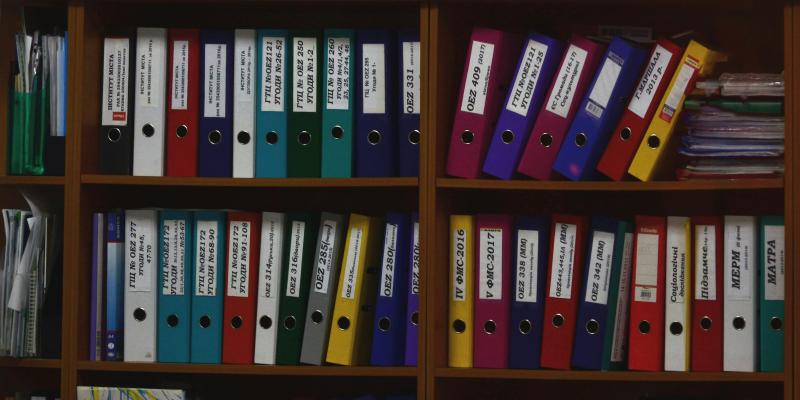
Your child's educational records are protected by law and you have the right to access them.
Under IDEA you have the right to:
- Inspect and review all educational records related to your child
- Request amendments if you believe a record is inaccurate or misleading
- Control who has access to your child's records
The school must provide you access to records within 45 days of your request. If you believe any information is incorrect, you can formally request that it be changed. If the school refuses your amendment request, you have the right to a hearing on the matter.
Why does this matter for autism families specifically? Records can include evaluations, progress reports, and teacher notes - together, these documents paint a full picture of your child's school experience and growth over time. Reviewing them regularly helps you stay informed and ensures you always have the information you need to advocate effectively for your child.
Parents often aren't fully engaged in the special education process because they don't understand the documents they're entitled to review. Knowing you can ask for every record, and reviewing them regularly, is one of the most proactive things you can do as an advocate for your child.
#6: Your Right to Participate in IEP Meetings
Here's something that surprises many parents: you are not just invited to IEP meetings, you are a required member of the IEP team.
IDEA makes it clear that parents are full, equal members of the IEP team. The school cannot finalize an IEP without your participation (or documented attempts to include you). Your voice, your concerns, and your knowledge of your child are legally required parts of the process.
The special education process is most effective when parents and school personnel work together and the law was designed to promote exactly that partnership.
Your right to participate includes:
- Being notified in advance of any meeting about your child's evaluation, IEP, or placement
- Requesting that meetings be scheduled at a mutually agreed time and place
- Bringing others with you, including advocates, family members, or professionals who know your child
- Recording meetings in certain states (check your state's laws)
You also have the right to request an IEP meeting at any time, you don't have to wait for the annual review. If something isn't working or your child's needs have changed, you can call a meeting. Put the request in writing and send it to your student’s special education teacher.
#7: Dispute Resolution Options

Even when parents and schools work together in good faith, disagreements happen. Procedural safeguards give you three formal options for resolving disputes, and knowing all three helps you choose the right path.
1. Mediation Mediation is a free, voluntary process where a neutral, trained mediator helps both sides reach an agreement. All discussions during mediation are confidential and cannot be used in a later due process hearing. It's a good first step when the relationship with the school is still intact but you disagree on a specific issue.
2. State Complaint You or anyone on your behalf can file a formal complaint with your state's Department of Education if you believe the school violated IDEA. The state must investigate and issue a decision within 60 days.
3. Due Process Hearing A due process hearing is a more formal, legal proceeding (similar to a court hearing) where both sides present evidence before an impartial hearing officer. This is typically used for more serious disagreements, such as disputes over placement, FAPE, or evaluations. You may want to consult a special education attorney if you're pursuing this route.
One critical protection: the "stay-put" rule. Your child has the right to continue receiving their current services while a dispute is being resolved through mediation or due process. The school cannot change your child's placement while a dispute or due process hearing is ongoing.
#8: Discipline Protections for Students with Disabilities
When a student with a disability faces suspension or other disciplinary action, special rules apply. This is an area where many autism parents get caught off guard and knowing these protections ahead of time makes a big difference.
Under IDEA, short-term removals (usually called suspensions) of up to 10 school days in a school year are generally permitted. However, once suspensions go beyond 10 school days, this may constitute a change of placement, which triggers additional rights and protections for your child.
One of the most important protections that kicks in is the Manifestation Determination Review (MDR). Within 10 business days of a decision to change placement due to discipline, a meeting must be held to determine whether your child's behavior was caused by, or had a direct relationship to, their disability. If the behavior is found to be a manifestation of the disability, the disciplinary change of placement cannot move forward.
It's also important to know that even during extended removals, your child has the right to continue receiving educational services so they can keep participating in the general curriculum and receive their IEP services. A removal from school does not mean a removal from learning.
You have the right to be notified promptly when a removal is being considered and to participate in any meetings related to your child's discipline. If you disagree with the outcome of a manifestation determination, you can request a due process hearing.
Bonus Tip: You Don't Have to Navigate This Alone
Understanding procedural safeguards is a game-changer, but knowing how to apply them in real IEP meetings, feeling confident in the moment, and figuring out which next steps make sense for your family? That's where having personalized support in your corner makes all the difference.
Grow Autism Coaching provides one-on-one advocacy & coaching for parents of autistic children, helping you understand your rights, prepare for IEP meetings, and confidently advocate for the support your child deserves.
Not sure where to start? Book a free consultation call and take the first step toward feeling empowered in every school meeting.

Moving Forward
Procedural safeguards aren't just a stack of legal paperwork handed to you at your child's IEP meeting. They are your rights, and they were designed to make sure you never have to fight for your child's education alone.
From the moment your child is referred for evaluation to every annual IEP meeting and beyond, these protections are in place to keep the process fair, transparent, and centered on what your child needs. Remember: you are a required member of your child's IEP team. You have the right to consent, to question, to review records, to request evaluations, and to question decisions you disagree with.
Now that you understand what procedural safeguards are and what each section means, you can walk into your next school meeting with confidence and clarity.
Frequently Asked Questions (FAQs)
Q: What are procedural safeguards in special education?
Procedural safeguards are the legal rights granted to parents and students under IDEA. They protect your right to participate in decisions about your child's education, review records, give or deny consent, and resolve disagreements with the school.
Q: How often does the school have to give me the procedural safeguards notice?
Schools are required to provide you with the procedural safeguards notice at least once per year. They must also give you a copy when your child is first referred for evaluation, when you file a complaint or due process request, when a disciplinary change of placement occurs, and whenever you ask for one.
Q: Can I request a copy of the procedural safeguards at any time?
Yes! You have the right to request a copy of the procedural safeguards notice at any time. Simply contact your child's special education teacher or case manager and ask. The school is legally required to provide it.
Q: What do I do if I think the school is violating my child's rights under IDEA?
Start by documenting everything in writing and talk to the school first. If nothing changes then explore your dispute resolution options: mediation, filing a state complaint with your Department of Education, or requesting a due process hearing. Consider reaching out to a special education advocate or attorney to help you navigate the process.
Q: Do procedural safeguards apply to 504 plans as well?
Section 504 of the Rehabilitation Act has its own set of procedural safeguards, separate from IDEA. Under 504, schools must inform parents of their rights before any evaluation or plan is developed, allow parents to participate in the process, and provide a way to file complaints if they believe the plan isn't being followed.
