
Autism in Women: What It Looks Like, How to Get Diagnosed, and What Comes Next
Have you ever felt like you’re somehow out of sync with everyone else,like you’re following rules no one actually explained to you? Maybe you’ve spent years wondering why things that seem “easy” for other people feel exhausting or confusing for you. On the outside, you might look like you’re coping just fine, but internally it’s a constant effort to keep up.
If that sounds familiar, there’s a reason many women go years without clear answers. Autism in women often doesn’t match the stereotypes most people are taught to recognize. It can be hidden behind masking, misdiagnoses, and a system that wasn’t built to identify how it shows up in adult women. This is why more women are being identified later in life. Research shows that nearly 80% of autistic females are undiagnosed by age 18 and diagnosis rates in women continue to rise as awareness improves.
This article breaks down the 8 things you need to know about autism in females: what it can actually look like, how to pursue a diagnosis, and what support can look like afterward. Whether you’ve just been diagnosed or you’re still wondering “could this be me?”, this is a starting place to help you make sense of it all.
Key Points Covered:
- Why autism in women is often missed or misdiagnosed
- What autism looks like in women
- The role of masking in female autism
- How to get an autism diagnosis as a woman
- What to expect during an adult autism evaluation
- Why autistic women are often misdiagnosed
- Support and resources after diagnosis
- How autism coaching can help
1. Why Autism in Women Is So Often Missed or Misdiagnosed
For decades, autism was considered a "male condition." Early research was almost entirely conducted on male subjects, and the diagnostic criteria were built around how autism looks in boys and men. This left a generation of autistic girls and women completely invisible to the medical system.
The numbers tell a striking story. A 2024 study found that autism diagnosis rates rose by 305% among girls and 315% among women between 2011 and 2022, compared to 185% among boys. That means the gap is finally narrowing, but there is still a long way to go.
One of the biggest reasons for missed diagnosis is the diagnostic tools themselves. Most autism assessments were standardized on male samples. If your traits do not look like the textbook male presentation, a clinician who is not trained in female autism may simply miss it. You might be told you are "just anxious" or "a little quirky" or that you "do not seem autistic". This can be one of the most frustrating phrases autistic women report hearing.
Another reason is that autistic girls are referred for evaluation far less often. Historically, boys were referred for autism assessment 10 times more than girls. Teachers, parents, and doctors were not trained to spot the quieter, more internal presentation that often shows up in females.
2. What Female Autistic Traits Actually Look Like
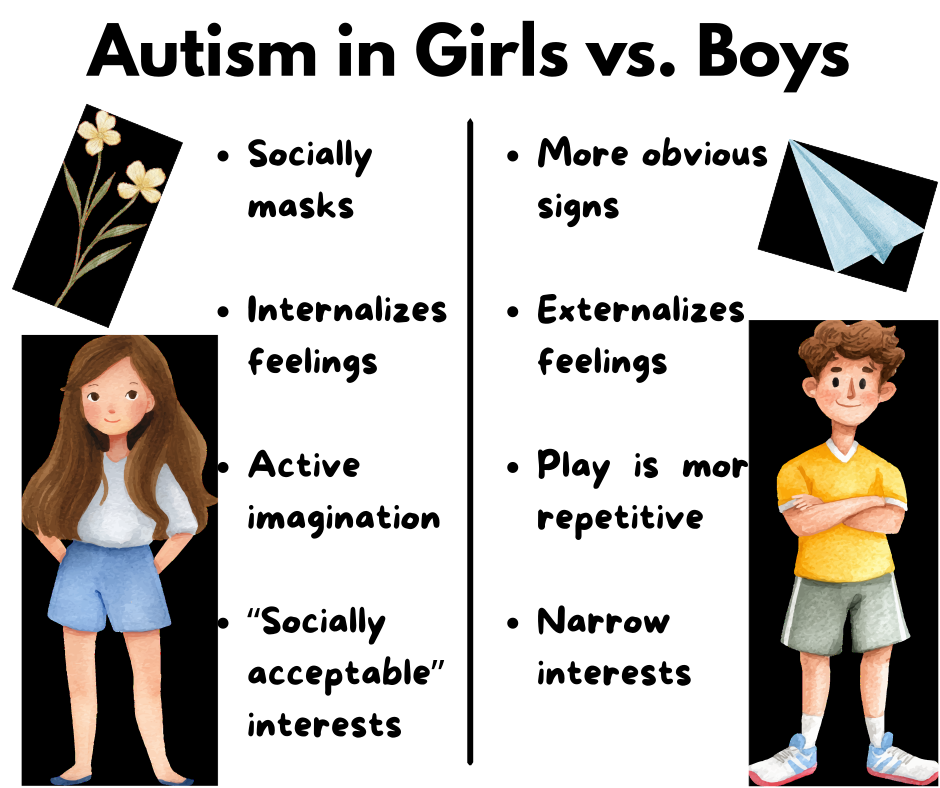
Autistic traits in women vary from person to person but they are often quieter, more internal, and easy to overlook, even by trained professionals. Here are some of the most common autistic traits in women and girls that go unnoticed:
- Deep, intense special interests - often in topics that seem socially acceptable, like a specific TV show, animals, history, or celebrities
- Difficulty with unstructured social situations - even if you appear "fine" in structured ones
- Sensory sensitivities - overwhelm from noise, light, texture, smell, or crowds
- Preference for routine and predictability - strong discomfort when plans change
- Feeling emotionally exhausted after social interactions - even ones that went well
- Intense empathy - sometimes to the point of emotional overload
- Difficulty with executive function - starting tasks, managing time, staying organized
- Struggles with friendships - wanting connection but feeling like you never quite "fit in"
- Black-and-white thinking - difficulty with gray areas and a wanting things to be fair all the time
According to UCLA Health, autistic females often report more sensory symptoms and fewer visible communication difficulties than males. Their traits tend to stay inside the socially acceptable range, which is exactly why they go unnoticed for so long.
Think of it this way: autism in females often looks like someone trying hard to keep up with a world that was not designed for the way their brain works and succeeding well enough that no one notices the effort.
3. Autism Masking in Women: What It Is and Why It Matters
If there is one concept that explains why so many women go undiagnosed for decades, it is masking. Masking is the conscious or unconscious process of hiding autistic traits to appear neurotypical.
Autistic women are particularly skilled at masking. From a young age, girls are often given more social training than boys. Society expects girls to be socially aware, emotionally attuned, and polite. Autistic girls learn to observe and mimic these behaviors with precision, often without anyone ever realizing how much effort it takes.
Common masking behaviors in women include:
- Rehearsing conversations in advance and scripting responses
- Forcing eye contact even when it feels uncomfortable
- Mirroring the body language and facial expressions of others
- Suppressing stimming (self-soothing repetitive movements)
- Laughing or nodding along when you do not actually understand a social cue
Masking behaviors are more common in autistic females than males; however, masking comes at a serious cost. It leads to exhaustion, anxiety, depression, identity confusion, and autistic burnout, a state of extreme exhaustion from masking and daily demands
After years of trying to seem “normal,” a lot of women feel like they’ve lost touch with their real self. Getting a diagnosis can begin the healing process of unmasking and relearning who you are.
4. Why Autistic Women Are Often Diagnosed With Anxiety or ADHD First

One of the biggest barriers to a female autism diagnosis is that autistic women are often diagnosed with other conditions first and those diagnoses can actually prevent clinicians from looking deeper.
The Autism Society reports that approximately 70% of autistic individuals have at least one co-occurring mental health condition. For women, the most common ones include:
- Anxiety disorders - often the first diagnosis given, masking underlying autism
- Depression - frequently resulting from the exhaustion of years of masking
- ADHD - frequently co-occurs with autism in females
- OCD - the "getting stuck" patterns can overlap with autistic rigidity
- Eating disorders - sensory sensitivities around food are often misunderstood
- PTSD - from years of social trauma or bullying
This does not mean all of these diagnoses are wrong, many autistic women do genuinely have anxiety and depression. But these conditions are often symptoms of living undiagnosed and unsupported for years, not the root cause. Treating anxiety without addressing the underlying autism is like treating the smoke without finding the fire.
5. How to Start the Process of Getting a Female Autism Diagnosis
If you are reading this and thinking "this sounds like me" this guide is where you can start. Getting a formal autism diagnosis as an adult woman can feel overwhelming, but breaking it into steps makes it manageable.
Step 1: Start with self-reflection
Write down your experiences. Think back to childhood. Did you struggle socially even when you wanted connection? Did you have intense interests? Did you always feel "different" but could not explain why? Journaling your experiences can be powerful for both you and a future clinician.
Step 2: Talk to your primary care provider
Your primary care physician is a good first contact, they can rule out other conditions and provide referrals to specialists.
Step 3: Find a clinician experienced in female autism
Look for a psychologist, psychiatrist, or neuropsychologist who specifically has experience diagnosing autism in adult women. Many clinicians still use outdated male-centric frameworks, so asking directly about their experience with female autism presentation is a fair and important question.
Step 4: Complete the evaluation
An adult autism evaluation typically involves a detailed developmental history, questionnaires, and a clinical interview. You'll likely fill out forms about your behavior, sensory experiences, and social patterns, and a clinician will ask about your childhood, relationships, routines, and any challenges you’ve faced over time.
Step 5: Be persistent
Many autistic women are told “you don’t seem autistic” or are dismissed. If this happens, seek a second opinion if you feel like autism fits your experience and you want answers. You know your patterns, challenges, and inner experience better than anyone else.
6. What to Expect During an Adult Autism Evaluation
Walking into an evaluation can feel nerve-wracking, here is what to expect so you can go in prepared and confident.
A comprehensive adult autism evaluation typically includes:
- A detailed intake interview about your current challenges and daily life
- A developmental history, questions about your childhood behavior, school experiences, and social development
- Standardized questionnaires you fill out yourself (and sometimes input from someone who knows you well)
- A clinical observation or structured interview with the evaluator
- A review of any previous diagnoses, therapy records, or school reports
One important tip: bring notes. Write down specific examples ahead of time. Masking can actually cause you to present as more neurotypical during an assessment, so having concrete examples of your struggles ready helps the clinician see the full picture.
✨ Bonus Tip: Take a Validated Online Screener First
If you are not sure whether to pursue a formal diagnosis, consider starting with a validated screening tool. The Autism Spectrum Quotient (AQ-10) is a free, 10-question tool used by clinicians as an initial screener for ages 16+. It is not a diagnosis, but if you score in the range that suggests further evaluation, it can be a helpful piece of evidence to bring to your doctor. You can find the AQ-10 test here.
7. Support for Autistic Women: What's Available After Diagnosis

Getting a diagnosis is just the beginning, here are some of the most valuable supports available to autistic women after diagnosis:
Mental Health Therapy
Look for a therapist who uses neurodiversity-affirming approaches and understands autism in women. Cognitive Behavioral Therapy (CBT) and mindfulness-based strategies have both been shown to help autistic adults manage co-occurring anxiety and depression.
Community and Peer Support
Connection with other autistic women can be life-changing. The Autistic Women and Nonbinary Network (AWN) is a wonderful community by and for autistic women, girls, and nonbinary individuals. Online communities, including many on social media, have also become a powerful source of connection, validation, and shared experience.
Workplace and Educational Accommodations
A formal autism diagnosis opens the door to legal protections. In the US, the Americans with Disabilities Act (ADA) provides the right to reasonable workplace accommodations. These might include flexible hours, remote work, written rather than verbal instructions, or a quieter workspace.
Sensory and Lifestyle Tools
Learning your sensory profile can transform your daily life. Noise-cancelling headphones, weighted blankets, lighting adjustments, and structured routines are accommodations that can help you thrive in everyday life.
Autism Coaching
Coaching focuses on the present and future. An autism coach can help you build systems, self-understanding, and confidence in your day-to-day life.
8. How Autism Coaching Can Help Autistic Women Thrive
Receiving a late autism diagnosis as a woman is both a relief and a moment of grief. Relief, because finally things make sense. Grief, because you might be mourning the support you needed but never received. Coaching can help you navigate both.
At Grow Autism Coaching, we work specifically with autistic individuals to help them understand their own brains, build strategies that actually work for them, and create lives that feel authentic.
Coaching can support you in areas like:
- Understanding your sensory needs and building an environment that works for you
- Managing executive function challenges - planning, starting tasks, transitions
- Building identity and self-worth after a lifetime of masking
- Learning how to advocate for yourself in medical, professional, and personal settings
- Creating routines and systems that reduce overwhelm
- Processing what a late diagnosis means for your story
You do not have to figure this all out on your own. Whether you are freshly diagnosed or have known for years and are looking for a next step, coaching provides a space where you can show up exactly as you are.
If you are curious, we offer a free consultation call to discuss your goals, what you want out of coaching and whether this feels like the right fit for you.
If this article felt familiar, that’s not a coincidence. Many women discover later in life that they are autistic, often after years of navigating a world that doesn’t fit how their brain works.
The good news is diagnosis rates for women are rising, awareness is growing, and the supports (coaching, therapy, community, and accommodations) are more accessible than ever before.
A diagnosis doesn’t change who you are. It just gives you a clearer framework for understanding your patterns and experiences. For many people, that shift makes it easier to stop working against themselves and start building systems that actually fit.
Wherever you are in this process, you’re allowed to look for answers and support that make sense for you.
Frequently Asked Questions (FAQs)
Q: Can I get an autism diagnosis as an adult woman if I had no childhood diagnosis?
Yes. Many autistic women are diagnosed for the first time in their 20s, 30s, 40s, and beyond. A full developmental history is part of the evaluation, but you do not need childhood documentation to receive a diagnosis.
Q: What if I go to get evaluated and I am told I am "not autistic enough"?
Seek a second opinion. This is extremely common for autistic women because many evaluators are still using male-centered frameworks. Look specifically for a clinician who specializes or has experience with autistic females.
Q: Does getting a formal autism diagnosis cost a lot of money?
Costs vary widely. A full neuropsychological evaluation can cost anywhere from $1,500 to $5,000+ out of pocket in the US, and insurance coverage is inconsistent. However, many providers offer sliding scale fees, and telehealth options are often more affordable. Some primary care providers or psychiatrists can also provide an autism diagnosis at a lower cost, which is equally valid for accessing supports and services.
Q: What is autistic burnout, and how do I know if I am experiencing it?
Autistic burnout is a state of extreme exhaustion from masking and daily demands, it goes beyond regular tiredness. Signs include a sudden or gradual loss of previously held skills, extreme difficulty with daily tasks, emotional withdrawal, and an inability to mask anymore. Burnout can last weeks or months. Rest, removing demands, and support are the most effective responses.
Q: Is self-diagnosis valid for autism?
Self-identification is meaningful and many people in the autistic community respect it. However, a formal diagnosis from a qualified professional is required to access legal protections (like ADA accommodations), many mental health services, and official support programs. If a formal diagnosis isn’t accessible right now, self-identification can still help you connect with others and find information that resonates with your experience.
