
Utah Resources for Autistic Adults: Jobs, Support, and Funding
A Guide for Utah Neurodivergent Young Adults and Teens Who Need Support
If you’ve recently graduated or aged out of high school in Utah, you might have noticed something: the supports that used to just be there suddenly aren’t anymore. Your IEP is done. The school team you relied on is gone. The structure that helped you get through the week disappeared almost overnight, and nobody handed you a clear guide for what comes next in Utah’s system.
This is one of the most common experiences for autistic young adults and their families across the state. The transition out of school can feel like the safety net just got pulled away. But here’s what many people don’t realize: the supports didn’t disappear. In Utah, they just moved into a different system, and a lot of them are harder to find if you don’t know where to look.
This guide is here to change that. Whether you’re looking for help with work, friendships, staying organized, or just figuring out what’s available to you, this post walks through real support options across Utah, from outdoor programs and job coaching to state funding you may not know you qualify for. You don’t have to figure out adulthood alone.
In This Guide, You’ll Learn About:
- Job support and vocational rehabilitation services
- Local outdoor recreation programs in Utah
- Social skills groups and community connections
- Executive functioning tools and strategies
- Coaching options for one-on-one support
- University-based autism centers
- Mental health resources specific to neurodivergent adults
- Utah financial assistance programs
1. Vocational Rehabilitation: Your Job-Support Starting Line
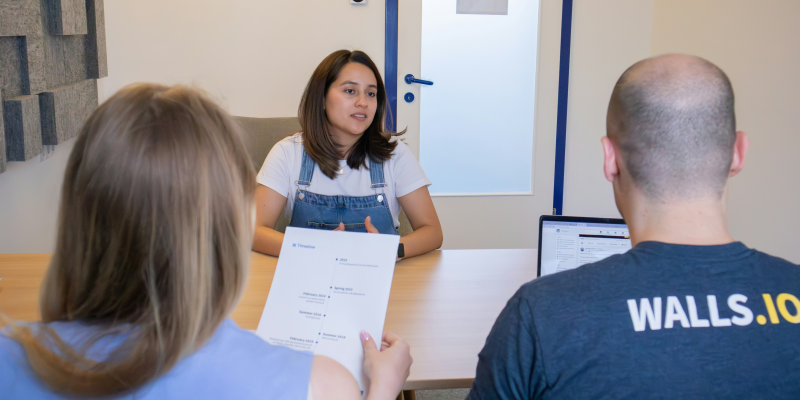
If keeping or finding a job feels impossible, Vocational Rehabilitation (VR) is often the best first call you can make. Utah’s State Office of Rehabilitation (USOR) has about 27 offices across the state, which means support is likely close to where you live.
VR counselors can help you figure out what kind of work fits your strengths, write a resume, practice for interviews, and even coach you on the job after you start. They also connect you with job placement services and, in some cases, pay for that support through a Community Rehabilitation Provider.
Think of it like having a guide at your side, not to do the work for you, but to make sure you know the path and aren’t walking it alone. Research shows that social demands at work, not the job tasks themselves, are often the biggest barrier for autistic employees. VR can help you build tools for exactly that.
How to get started: Visit jobs.utah.gov/usor/vr or call 1-866-454-8397. You can also attend a welcome session in person or online.
Also check out: RISE Services and EnableUtah both work directly with job seekers and employers to create good matches and reduce stress on both sides.
2. Common Ground Outdoor Adventures:
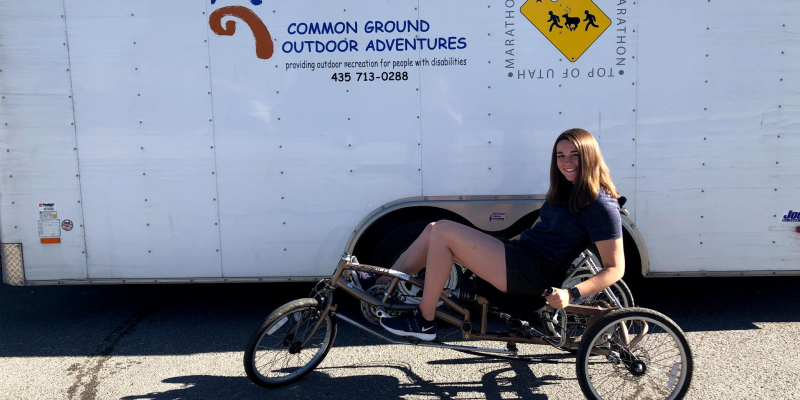
Sydney from Grow Autism Coaching worked for Common Ground as a summer intern in 2019!
Located in Logan, Utah, Common Ground Outdoor Adventures (CGOA) is a nonprofit that has been helping people with disabilities experience the outdoors since 1993. They serve over 3,600 people with disabilities every year through activities like river rafting, kayaking, cycling, skiing, dogsledding, camping, and more.
What makes CGOA so special is what happens when you do something you didn’t think you could. Whether it’s a whitewater rapid or a cycling trail, that experience builds real confidence and that confidence carries into everyday life. CGOA says it themselves: pushing limits in nature helps people in “the quest for meaningful employment, the pursuit of relationships, and active participation in community life.”
They also provide adaptive equipment and trained support, so you don’t have to worry about not knowing how. You just have to show up. Scholarships and financial assistance are often available, and activities are designed to be accessible regardless of your disability.
Contact: cgadventures.org | Logan Office: 435-713-0288
3. Social Skills Groups: Finding Your People
Making friends is hard. For autistic adults it can sometimes feel impossible, not because you don’t want connection, but because the unwritten social rules can feel like a foreign language nobody handed you a guide for. You’re not bad at socializing, you’re just working with a different set of instructions.
Several Utah organizations offer structured social skills groups specifically for autistic and neurodivergent teens and adults. The Utah Center for Evidence Based Treatment runs PEERS groups, a research-backed program designed to help autistic people build and maintain friendships. The Neurodiversity Clinic in Salt Lake City hosts a free community meetup on the first Tuesday of every month, open to all adults.
Utah Family Therapy (UFT) in American Fork runs a weekly two hour Dungeons & Dragons Therapy Group specifically designed to blend tabletop role-playing with therapeutic techniques to foster personal growth, social skills, and emotional healing. Learning to navigate social situations is way more fun when there’s also a dragon involved. They have three groups; teens (13-17), young adults (18-29) and adults (30+). This is also a great place to meet friends that have similar interests.
Also check out: The Melisa Nellesen Center for Autism at Utah Valley University, which hosts sensory-friendly community events and social connection programs.
4. Executive Functioning Support: Getting Out of the Brain Fog
Executive functioning is a fancy term for all the brain skills that help you plan, start tasks, manage time, and stay organized. For many autistic brains, these skills work differently - especially under stress. It’s not laziness, it’s neurology.
The good news is there are lots of practical tools and systems that work well for autistic brains. Visual dashboards and whiteboards help (because out of sight really does mean out of mind). Notion or Google Tasks can make recurring tasks automatic. There’s an app called GoblinTools that is especially popular: you type in a task and it breaks it down into tiny, manageable steps so you’re not staring at “Clean room” wondering where on earth to start.
Helpful tool: AUSM has a free executive function resources page with apps, checklists, and guides specifically for autistic adults.
Utah Resources: Grow Autism Coaching is a Utah-based coaching service for autistic young adults and their families by creating personalized plans for executive functioning skills. They offer free consultation calls to talk about your individual needs and how coaching can help.
Contact: growautismcoaching.com | Schedule your free consultation here.
5. National Ability Center: Adventure, Skill-Building, and Community
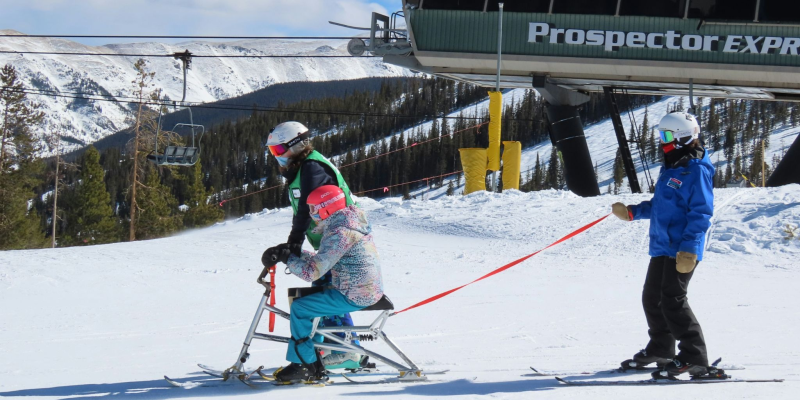
Another outdoor recreation resource in the National Ability Center (NAC). Based in Park City with locations in Salt Lake City and Moab, NAC has been empowering people with disabilities for over 40 years. One of their largest populations served is adults and youth on the autism spectrum.
The NAC offers something for everyone: skiing, snowboarding, horseback riding, rock climbing, archery, cycling, paddleboarding, and more. But it’s more than just recreation. Their community-based programming is specifically designed to help young adults with developmental disabilities build lifelong skills and navigate adulthood with more confidence and independence.
They also offer the COACH Internship program for young adults ages 16–22, which provides structured growth and learning opportunities alongside adaptive recreation. There are camps for teens and adults with autism that include community field trips, sensory and science projects, and social skill building. Financial assistance is available.
Contact: nationalabilitycenter.org
6. University Based Autism Centers:
Utah is home to some excellent university based autism centers that offer real services, not just research. These centers often provide assessments, therapy, social groups, and transition support for young adults. Many also offer sliding-scale fees.
University of Utah Autism Spectrum Disorder Clinic (healthcare.utah.edu) offers ASD assessments, social skills groups, individual and family therapy, behavior intervention, and more. They work with teens and adults, not just young children.
Melisa Nellesen Center for Autism at Utah Valley University (uvu.edu/autism) is specifically designed for autistic adults aged 18–25 who want to build independence, social skills, and career readiness. They also host sensory-friendly community events.
BYU Autism Connect (education.byu.edu/autism) provides ASD testing and resources for families, and runs active research projects for adolescents and women who may be on the spectrum.
7. Mental Health Support Designed for Neurodivergent Minds
Autistic adults experience higher rates of anxiety, depression, and burnout than the general population. That’s not a character flaw, it’s what happens when your brain is constantly working overtime to navigate a world not built for it. Getting mental health support that actually understands autism makes a huge difference.
The Neurobehavioral Center for Growth (neurobcg.com) has clinics across Northern Utah including Logan, Bountiful, Layton, Ogden, West Jordan, and Salt Lake City. They offer a multidisciplinary team (therapists, psychologists, behavior analysts, and psychiatrists) who understand neurodevelopmental conditions.
Also useful: The Utah Parent Center (utahparentcenter.org) offers free webinars on autism-related topics and can help connect you with the right providers in your area.
8. State Funding Help: DSPD and the Adult Autism Treatment Account

Sometimes the biggest barrier isn’t finding the right support, it’s paying for it. Utah has two main funding pathways that can help cover the cost of services for autistic adults.
The Division of Services for People with Disabilities (DSPD) provides long-term support funding, including job coaching, residential services, and Medicaid waivers. There is a waitlist, so applying sooner rather than later is worth it. Call 1-877-568-0084 to learn more.
The Adult Autism Treatment Account (AATA) is a Utah-specific grant program that helps pay for autism treatment for adults who meet eligibility requirements. A six-member advisory committee reviews applications and awards funding from donations and state-appropriated money. Visit familyhealth.utah.gov/cshcn/aata for the application.
Note: Applications are not always open year-round. The program opens periodically when funding is available, so it’s important to check the website regularly or join updates to avoid missing the next application window.
Utah Work Incentive Planning Services (jobs.utah.gov/usor) helps autistic adults figure out how working will affect Social Security benefits, so you can make a plan without the fear of losing what you depend on. These services are completely free for eligible clients.
⭐ Bonus Tip: The Utah Parent Center Is More Than Its Name
Even though it says “Parent Center,” the Utah Parent Center (utahparentcenter.org) is an incredible free resource for autistic young adults too. They offer free guidance, advocacy, webinars, and help navigating everything from healthcare to housing to disability rights. You can call them at 801-272-1051 or 1-800-468-1160 and talk to a real person who actually knows Utah’s system. It’s like having a knowledgeable friend who helps you decode the confusing paperwork.
What About One-on-One Coaching?
Many of the resources in this guide are group-based or system-focused. They’re valuable, but they don’t always give you personalized, flexible, ongoing support in the areas that matter most to you specifically.
That’s where coaching comes in. A coach who works with neurodivergent adults can help you set goals, work through daily challenges, build life skills, and figure out your own strategies, without judgment. Unlike therapy, coaching is future-focused and action-oriented. It meets you where you are and helps you move forward at your own pace.
If you’re curious whether coaching might be a good fit alongside the other resources in this guide, feel free to reach out to Grow Autism Coaching, a Utah-based coaching business. The goal is always to help you find what actually works, not a one-size-fits-all answer.

You Deserve Real Support
Being autistic in a world that wasn’t designed for your brain is genuinely hard work. But you don’t have to figure it all out on your own, and you don’t have to settle for “just getting by.”
From vocational rehabilitation and state funding, to outdoor adventures and social skills groups, Utah has more support than many people realize. The key is knowing where to look. Whether you start with one resource or explore several, every step you take toward support is a step toward a life that feels more manageable, more connected, and more like yours.
Save this guide, share it with someone you think could use it, and remember: needing help isn’t a weakness. It’s how everyone, neurodivergent or not, gets further than they could alone.
Frequently Asked Questions (FAQs)
Q: Do I need an official autism diagnosis to access these resources?
Not always. Some programs like VR require documentation of a disability, but many social groups, outdoor programs, and coaching services are open to anyone who self-identifies as neurodivergent. It’s always worth calling and asking, most organizations are flexible and understanding.
Q: I’m overwhelmed. Where should I start?
Start with one thing. If employment is your biggest stress, call Vocational Rehabilitation. If loneliness is the hardest part, look up a social skills group or the Neurodiversity Clinic’s free monthly meetup. You don’t have to tackle everything at once. Pick the one area that feels most urgent and go from there.
Q: What if I’ve tried support before and it didn’t help?
That’s really common, and it doesn’t mean support can’t work for you. It often means the type of support wasn’t the right fit. The resources in this list vary a lot - some are more structured, some are flexible, some are fun and outdoors. Don’t give up just because one approach didn’t click.
Q: Are any of these services free or low-cost?
Yes! Vocational Rehabilitation services are often free if you qualify. Common Ground Outdoor Adventures and the National Ability Center both have financial assistance and scholarships. The Utah Parent Center is completely free. The Neurodiversity Clinic’s monthly meetup is free. Many therapy groups and coaching services also offer sliding-scale pricing.
Q: I’m in Northern Utah (Cache Valley area). Are there local options?
Absolutely. Common Ground Outdoor Adventures is based right in Logan. The Neurobehavioral Center for Growth has a Logan location. Bear River Activity and Skill Center also serves adults with developmental disabilities in the Logan area. And many statewide services like VR have offices across Utah.
